
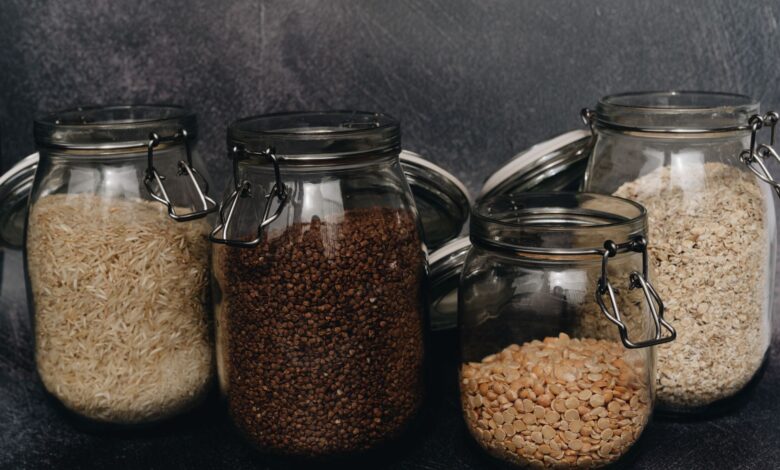
A printed “airtight” claim on a pantry jar is a marketing promise rather than a mechanical guarantee. Heavy bags of flour warp thin plastic lids, and monsoon humidity exploits any microscopic gap that opens up. True moisture protection requires a lid that maintains steady downward pressure and a gasket that recovers its shape.
Material science shows exactly why these seals degrade under constant stress, while the FSSAI packaging regulations establish the baseline for food-safe materials alongside BIS standards. When you evaluate the best airtight containers for storing rice, dal and atta in India, look at the physical rigidity of the lid and the springiness of the seal instead of the label.
Why most “airtight” pantry containers fail the monsoon test
A label claiming a jar is airtight only describes the manufacturer’s goal, not a tested mechanical barrier. True seal integrity requires the lid to press evenly around the entire rim, blocking every route water vapour might take. Snap-fit designs only apply pressure where the clips lock, leaving the gaps between them vulnerable to persistent monsoon moisture.
How humid air gets pumped past a weak seal
Daily temperature changes in the kitchen finish the job by making the trapped air expand and contract. This thermal cycling forces the container to breathe, drawing damp room air past any poorly pressed gasket and leaving condensation on the grain.
People who store rice in snap-lid jars through a single rainy season usually see clumping start right at the inner edge. Moisture enters precisely where the gasket lacks pressure, showing the container was never fully sealed to begin with.
A small spice jar puts almost no strain on its lid, allowing even a basic seal to last for years. Scaling that same design up to hold five or ten kilos of heavy staples changes the physics entirely, because the shifting mass pushes outward against the walls and down on the base. Bulk storage demands reinforced bottoms and precise lid seating that thin plastic simply cannot provide.
Material safety is a completely different metric from mechanical seal performance. The FSSAI packaging regulations verify that plastics and other materials are safe for food contact, but they do not test how tightly a lid actually closes. A container can meet every health standard and still let damp air inside all season long.
The engineering behind a true moisture-proof seal
Three physical elements determine if a container survives a humid kitchen: the locking mechanism, the gasket material, and the channel holding it. Four-clip designs concentrate force at the hinges, screw tops distribute pressure evenly around the rim, and vacuum models add suction to the physical seal.
Manufacturers typically use silicone, EPDM rubber, or TPE for the gasket, and the depth of the groove determines if it stays in place. A ring seated deeply inside a moulded channel holds its alignment, whereas a shallow slip-on band tends to roll and twist out of position when you close the lid.
Lower-quality rubber rings often experience gasket compression set, meaning the material permanently flattens under constant lid pressure and loses its ability to spring back. The physical sealing force vanishes even if the rubber remains visually intact, a failure that usually shows up after three to six months of daily use.
The first seal maintains its rounded shape to fill the channel completely, ensuring the locking pressure blocks every entry point. The second material has flattened out and created a gap for vapour, proving that elastic rebound matters far more than simple thickness.
High-rebound silicone handles these exact kitchen conditions because it keeps its shape and sealing force through extreme temperature shifts and frequent hot washes. This durability is why a truly effective flour container almost always relies on a silicone ring instead of standard rubber.
Thermoplastic elastomer falls between silicone and rubber in terms of elastic recovery. Mid-tier containers using this material often seal perfectly when new, but they tend to lose their grip much faster than silicone models under identical clamping force.
The 5kg atta problem: lid warping and hinge fatigue
Many product reviews test airtightness using small, empty jars, which completely misses how bulk storage actually fails. Five kilos of dense flour or grain presses against the bottom and twists the plastic body whenever you lift it, usually causing the lid itself to warp long before the gasket degrades.
Closing four heavy clips on a large container requires significant leverage, which concentrates all that stress onto tiny plastic hinge points. Repeated snapping creates micro-fractures that appear as a pale haze, a warning sign that often becomes visible right before the hinge breaks completely.
Twist-lock and screw-top designs avoid this localized stress by distributing the sealing force evenly around the entire rim. You can test a locked lid by pressing your thumb hard into the centre, because any flex you feel while empty will turn into a permanent warp once the jar is full.
Material breakdown: food-grade plastic, steel, and glass for bulk storage
Polypropylene, 304-grade stainless steel, and borosilicate glass all react differently to the heavy weight and constant abrasion of bulk grains. A BPA-free label only confirms the chemical makeup of the plastic, meaning two containers with the same certification can perform entirely differently under a heavy load if their wall thickness varies.
High-quality polypropylene, identified by resin code 5, easily withstands years of pouring heavy grains. Thinner plastics develop stress cracks from the abrasive friction, and people who scoop rice daily usually notice this white haze forming first near the base where the physical strain concentrates.
Stainless steel canisters offer excellent durability and block light to slow nutrient degradation in stored flour. Their main vulnerability is the lid, because many models use simple friction-fit caps without a real gasket, allowing pests and damp air to enter through the only unsealed joint.
Borosilicate glass remains chemically inert and allows you to check inventory levels at a glance. A fully loaded ten-kilo glass jar creates a serious breakage risk in a busy kitchen, making it much better suited for open shelves holding smaller quantities rather than heavy bulk storage.
Mid-range to higher-priced sets with reliable silicone seals typically cost between ₹800 and ₹2,500, while cheaper options usually cut costs on the hinges or the gasket itself. Proper stock rotation matters just as much as a good seal, and The Right Way to Store Spices, Pulses, and Flours in an Indian Kitchen Without Losing Freshness explains how to keep ingredients fresh even inside a perfect container.
Material safety relies on established benchmarks like the BIS food storage specifications, which outline the chemical and physical requirements for food-contact plastics. These standards verify that the construction materials are safe, but they do not test the mechanical tightness of the seal itself.
Evaluation checklist for the best airtight containers for storing rice, dal and atta in India
You can test any plastic, steel, or glass container before buying in bulk using four simple physical checks. These methods require no special tools and quickly reveal if the design will actually hold up in a humid kitchen.
Seal rebound test
Press your thumbnail firmly into the rubber ring and let go to see how fast it recovers. High-quality silicone bounces back immediately without leaving a mark, whereas inferior rubber holds the indentation and has already lost its elastic memory.
Lid rigidity check
Lock the lid onto the empty jar and push your thumb hard against the middle of the plastic. A structurally sound lid will barely flex, but one that bows under your hand will warp under heavy grain and break the seal at the edges.
Hinge and latch inspection
Examine the plastic moulding around the hinge points for pale streaks or thin lines that indicate structural weakness. The locking latch should snap shut with a sharp, definitive click rather than feeling soft or spongy when you press it down.
Capacity accuracy warning
A five-litre volume label does not mean the jar holds five kilos of flour, because ground ingredients settle densely and displace the air inside. You should buy based on the printed weight capacity, or choose a larger volume size if you plan to store heavy milled grains.
Models that pass all four of these physical tests typically maintain a reliable barrier for several years. Failing even one check usually results in clumped flour, pest intrusion, or broken plastic within the first couple of rainy seasons.
A consistent pattern in customer reviews shows that the plastic body easily survives while the lid mechanism breaks down first. The lid handles all the mechanical sealing stress while the base merely supports the weight, making the hinges and gaskets the true point of failure.
Final thoughts
A container only earns the airtight label when its locking pressure and elastic seal withstand both heavy bulk staples and persistent monsoon moisture. Testing the lid rigidity and gasket rebound before you buy gives you the only reliable prediction of long-term pantry performance. Choosing models that pass these physical checks keeps your ingredients dry all season, while ignoring them guarantees the lid mechanism will fail regardless of how thick the plastic walls appear.
Frequently Asked Questions
Are vacuum-sealed containers worth the extra cost for daily dal and rice?
Pump-vacuum lids work well for long-term storage but fail for daily use because opening them breaks the seal. This constant re-pumping cycle accelerates valve wear, causing the mechanism to break down quickly.
How do I clean the silicone ring without stretching it out?
Pulling a wet ring from a deep groove permanently stretches the material, as elastomer compression mechanics explain. You should lift it out using a blunt wooden chopstick to preserve the original compression fit.
Will stainless steel airtight jars keep weevils out better than BPA-free plastic?
Pests cannot chew through solid steel or thick plastic, making the lid seal the only true vulnerability. A steel jar with a loose friction cap fails much faster than a plastic model with a clipped silicone ring.
