
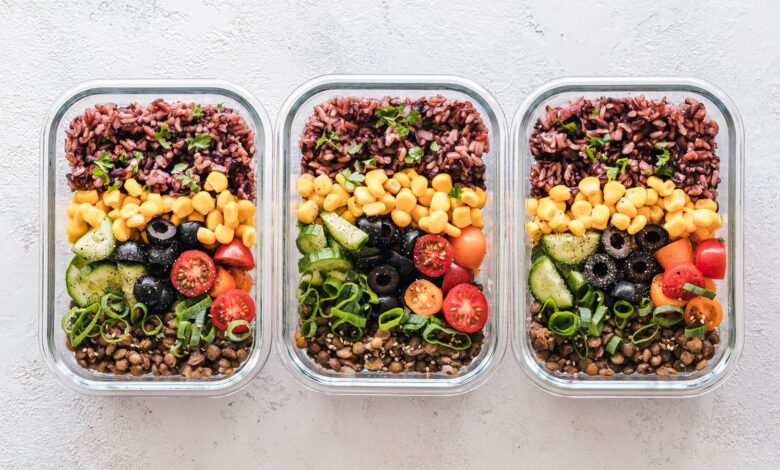
Glass, plastic, and steel all survive the fridge, but the freezer-to-microwave jump splits them: one labelled glass handles it, most plastics merely tolerate it, and steel never enters the microwave. Answering which food storage container is safe for microwave and freezer use in India therefore means matching each material to one extreme at a time and reading the stamp that names it. The split lands on borosilicate glass as the only material rated for both ends, and the sections below explain why.
The FSSAI packaging regulations cap overall migration from plastics at 60 mg/kg, a limit that bites hardest as temperature rises, which is why the reheating vessel matters more than the storage one. Official standards simply back the kitchen truth that a safe jar can still hide a cracking lid. The closing matrix maps each material to the zone where it actually stays safe.
Thermal shock: why the freezer-to-microwave jump breaks containers
Every container material expands when heated and contracts when chilled, so breakage happens when one face of the wall changes temperature faster than the other can follow. Soda-lime glass expands the most of the three materials, which is why a tub taken straight from the freezer can crack as microwave energy heats its inner surface while the outer wall stays cold.
Borosilicate glass swaps part of its soda for boron oxide, and that single change cuts expansion roughly in half so the wall absorbs a much wider temperature swing. The same logic runs through USDA microwave-safe labeling guidance, which treats labeled glass and ceramic as the default safe vessels while excluding metal pans entirely.
After a few months of freezer-to-microwave cycles, hairline cracks typically start at the corners of ordinary glass and unmarked plastic tubs. Corners concentrate the expansion mismatch between the hot and cold faces, so that is where the wall gives way first.
Plastics sit in the middle of the range, because they flex rather than shatter, yet that same flexibility lets a frozen tub warp once the food inside reaches oil temperatures. Steel goes the other way: it reflects microwave energy and arcs at its edges, so it never crosses into reheating territory at all.
Leaching at the extremes: what migrates into hot and frozen food
Migration is a temperature-driven process, since heat loosens the polymer matrix and any unbound additive while fat dissolves what water cannot. That is exactly why the FSSAI packaging regulations hold plastic packaging to an overall migration limit of 60 mg/kg, a ceiling that matters most when the food is hot and oily — precisely the reheating case.
Steel and glass sit at the other end of that scale, because neither contains mobile additives, so heat-driven migration is essentially nil. Steel’s only release pathway is corrosion when acidic food sits for weeks, which is a storage issue rather than a two-minute reheat issue.
Buyers who have reheated curry in unmarked plastic consistently report oily films and a soapy smell after a few weeks, because heat and fat pull plasticizers out of polymers never formulated for microwave duty. Federal food-safety notes describe the same failure as warping and chemical migration.
Why “BPA-free” doesn’t mean microwave-safe
BPA is only one monomer among many, so removing it changes nothing about the plasticizer chemistry that hot oil attacks. A BPA-free tub can still be polystyrene or PET, and both soften near boiling and release additives into fat.
The only plastic code with a genuine microwave track record is 5, polypropylene, whose higher melting point leaves headroom above normal food temperatures. Even then, treat BPA-free as a freezer-storage claim rather than a reheating licence for oily Indian food.
Stainless steel: the fridge champion that must skip the microwave
Stainless steel runs its temperature limits in the opposite direction, superb in the freezer and hazardous in the microwave. Metal walls reflect the magnetron’s energy and concentrate current at edges and seams, where it arcs, which is why no steel tiffin ever belongs near microwave duty.
Inside the cold chain the story flips to strength, and the BIS’s IS 14756 utensil standard governs composition and food-contact safety for stainless utensils. A 304-grade box shrugs off the moisture and odour that plastic absorbs, though the standard says nothing about lid quality, so check the seal separately.
Set a year-old steel tiffin beside a plastic one of the same age and the trade shows immediately: the steel still smells neutral after washing while the plastic carries last month’s sambar. Polymer matrices absorb fat-soluble aroma compounds that steel’s passive oxide layer simply refuses.
One caveat applies to wet storage, because pickles and tomato gravies held for weeks can pit the lower 200-series grades. Steel therefore earns long acidic storage only in verified 304.
Durability and real cost per use across materials
Durability splits into impact resistance, staining, and seal life, and each material fails in a different one. Steel dents but never shatters, borosilicate survives thermal swings but dies in one drop onto tile, and PP survives drops yet clouds, stains, and loses seal elasticity as its plasticizers leave.
Buyers who track replacements over a couple of years consistently rebuy plastic tubs two or three times before a glass or steel box needs anything. UV light, fat, and flex fatigue age polymers on a calendar that metal and glass simply ignore.
Cost per use follows that same calendar, and on this site’s worked calculation a ₹400 PP set used daily for an estimated two years lands near ₹0.55 per use. A ₹900 borosilicate set over an estimated five years lands near ₹0.50, so the premium nearly repays itself before a single crack enters the calculation.
Treat such figures as planning estimates rather than lab results.
The honest reading is that plastic wins only where breakage risk is real, such as tiffins carried by children. Everywhere else, the longer-lived materials work out cheaper over their life.
Which food storage container is safe for microwave and freezer use in India? The decision matrix
Use the matrix as a shelf plan, because each row names the one zone where a material is licensed to work. The cost column is an estimate built on the usage-life figures above, not a measured fact.
| Material | Freezer → microwave | Leaching at heat | Estimated cost per use |
|---|---|---|---|
| Borosilicate glass | Safe at both ends when labeled; rest a minute between | Essentially none | ≈ ₹0.5 over a ~5-year life |
| PP plastic, code 5, microwave-marked | Freezer fine; microwave tolerable, warps near oil heat | Low cold, rises with hot fat | ≈ ₹0.5–0.6 over a ~2-year life |
| Stainless steel 304 | Freezer and fridge excellent; microwave never | Essentially none | ≈ ₹0.3–0.5 over 5+ years |
Read the table as three one-job specialists rather than a ranking, since each material earns its keep in a single zone. Glass owns the reheat but pays for it in drop fragility and weight, steel owns the cold chain but must be transferred before heating, and PP is the drop-proof compromise with the shortest calendar and the weakest heat story.
Checking the stamp on any tub takes two seconds, because a wave line marks microwave approval and a snowflake marks the freezer. Those two symbols reveal the licensed zone, which is the whole decision made visible.
The practical verdict
No single material wins every zone, because borosilicate glass owns the freezer-to-microwave run, PP plastic earns cheap drop-proof freezer bulk, and steel stays the best fridge and tiffin metal precisely because it never meets the microwave. Match each container to one temperature job and check the stamp before every reheat. Do that and the shelves stay safe for years, while ignoring it leaves cracks, warps, and leached oils to decide for you.
Frequently Asked Questions
Can I freeze curry in a stainless steel tiffin and reheat it in the same container?
Steel freezes and refrigerates beautifully, but it reflects microwave energy, arcing and scorching the food at the edge. Freeze in the tiffin, then always transfer to borosilicate glass or marked PP before reheating.
Is borosilicate glass safe straight from the freezer to the microwave?
Labeled borosilicate typically tolerates that jump, because its low expansion resists thermal shock. Keep the lid vented and skip the trick with soda-lime glass, which cracks at roughly half the swing.
Does “BPA-free” plastic mean I can reheat oily food in it?
BPA-free names one chemical and says nothing about the plasticizers that hot oil pulls from most polymers. Reheat oily curry in glass instead, or accept a short-life, code-5 PP tub for that job.
