
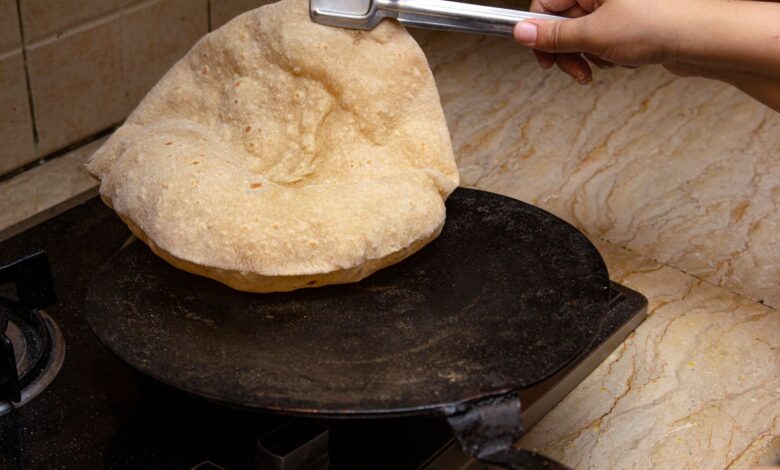
It is often at the time of making the fifteenth roti that it strikes a person. The chakla is dusted, and the belan’s handle is worn due to the years of usage, and yet, the stack of rotis is not big enough to prepare a joint-family dinner. Somewhere during the process of rolling and storing the roti, a roti press on Amazon ceases to be a device and becomes a solution.
The principal question is not whether this device can flatten the dough. For people who have had to face rolling twenty rotis at once, the decision they will make should be based upon this calculation.
Key Takeaways
- A manual roti press reduces rolling time by roughly 60–70% compared to a rolling pin for batch cooking[-10](https://leenovakitchenequipments.com/2026/01/23/top-roti-pressing-machine-supplier-in-gujarat/).
- For a joint family making 20+ rotis daily, a ₹500–1,500 manual press can break even in 2–6 months when you value your time at even ₹100/hour.
- The press delivers near-perfect roundness and uniform thickness, but the texture differs from hand-rolled rotis — softer vs. chewier depends on dough hydration and press technique.
- Elderly cooks or those with grip-strength issues benefit from the lever mechanism, which multiplies applied force, but not all presses are equally easy to operate.
- Cast-iron presses require seasoning and drying to prevent rust; stainless-steel models avoid rust but may not press as thin.
Manual roti presses — cast-iron or stainless-steel hinged devices with a lever handle — range from ₹500 to ₹6,000. Electric roti makers, costing ₹2,000–5,000, are a secondary option here; the main comparison is the manual press versus a rolling pin for households making 15–30 rotis per meal.
The 20-roti batch test: what the timer actually says
An experienced cook typically rolls one roti in 30–45 seconds. A manual press, once you’re practiced, can press a roti in about 10–15 seconds — place the dough ball, lower the lever, and the job is done.
Over a batch of 20 rotis, that gap adds up quickly. Trade estimates suggest pressing reduces rolling time by approximately 60–70%[-10](https://leenovakitchenequipments.com/2026/01/23/top-roti-pressing-machine-supplier-in-gujarat/), though the exact saving depends on dough hydration, press size, and how smoothly you handle the dough.
The speed advantage comes from eliminating multiple rolling passes. A belan shears the dough gradually; a press compresses it in one motion.
Because the plates are rigid, the press also produces rotis that are far more consistent in thickness and roundness. That uniformity saves the extra step of trimming and reshaping that often follows hand-rolling, especially for cooks still perfecting their technique.
In a joint-family setting where a single meal may require 30 rotis, shifting to a press can reclaim 15–20 minutes per session that would otherwise be spent at the chakla.
Try this before you buy: time yourself rolling 5 rotis with your belan, then estimate what 20 would take. Compare that to published press timings — usually 10–15 seconds per roti — to gauge your potential savings.
What the press does to dough (and why it feels different)
A rolling pin stretches dough through shearing action — the pin rolls across the surface, thinning the disk gradually while allowing gases to escape naturally. A roti press compresses the dough ball between two flat plates in a single stroke.
This difference in mechanical action changes gluten structure and trapped air, which affects final texture: hand-rolled rotis tend to be softer and more layered; pressed rotis are denser and often chewier. This isn’t a defect — it’s a trade-off.
For rotis destined for curries or dals where the bread is a vehicle, the difference is negligible. For standalone breads where texture is primary, it matters.
On Amazon.in, one buyer put it bluntly: “handmade rotis are more soft than presser machine”[-3](https://www.amazon.in/product-reviews/B0CV45VC6G/ref=zg_bsnr_g_1380181031_d_sccl_15_cr/260-5283652-0232804). The explanation lies in how each method handles trapped air.
Rolling progressively stretches the gluten network while letting fermentation gases escape unevenly, creating a tender crumb. Pressing, by contrast, flattens the dough abruptly, leaving fewer air pockets and a tighter, chewier bite.
A slight increase in dough hydration and a resting period after pressing can help soften the final roti, but a press will rarely replicate the exact layered texture of a hand-rolled phulka.
The grip-mechanics question: why leverage matters for elderly cooks
A roti press is not a strength test — it’s a lever. The handle multiplies the force you apply; a longer handle or a better pivot point means less effort to achieve the same flattening.
For elderly cooks or those with arthritis or reduced grip strength, this mechanical advantage can transform roti-making from a painful chore into a manageable task. The principle is the same one explored in our piece on Ergonomic Kitchen Tools for Elderly or Weak-Grip Cooks — lever length and handle circumference directly reduce strain during repetitive pressing movements.
However, not all presses are equal. Handle length, pivot smoothness, and the weight of the top plate all affect how much effort is actually required.
A heavy cast-iron top plate does some of the work for you — but it’s also harder to lift. A lighter stainless-steel press requires more arm strength to close.
The sweet spot is a press with a long enough handle (at least 6–8 inches from the pivot) and a smooth hinge that doesn’t bind.
Try this before you buy: if possible, test the handle throw in-store. Pull the lever through its full range to feel the resistance at the start and end of the press; it should move evenly without requiring a sudden surge of force.
Handle design and leverage: what to look for
Look for a handle that extends at least 6 inches from the hinge point — longer handles provide more leverage. The handle grip should be textured or contoured, not smooth metal that slips when your hands are floured or oily.
Some presses use a wooden or plastic sleeve over the metal handle; this improves grip but can crack over time. The hinge mechanism matters too: a loose hinge creates uneven pressure; a stiff hinge requires more force.
Examine the press with a piece of dough if possible — the top plate should descend evenly, not cock to one side. If the press rocks or wobbles on the counter, the base isn’t flat enough for consistent results.
Cost-per-use: when the press pays for itself
This is the section that answers the hidden question: “Is this thing actually worth the money?” The break-even calculation compares the cost of a manual roti press — typically ₹500–1,500 for cast iron, ₹1,000–3,000 for stainless steel[-10](https://leenovakitchenequipments.com/2026/01/23/top-roti-pressing-machine-supplier-in-gujarat/) — against the time saved per roti-making session.
If a joint family makes 20 rotis daily and a press saves approximately 10 minutes per session, that’s roughly 60 hours saved per year. Value that time at even ₹100/hour — a conservative estimate — and the press pays for itself in 2–6 months.
For electric roti makers, which typically fall in the ₹2,000–5,000 range for home models according to price aggregator listings, the break-even extends to about 8–18 months depending on usage frequency.
All figures are forward-looking estimates, not lab-verified measurements. Actual payback depends on your rolling speed, electricity costs (for electric models), and how consistently you use the appliance.
As of July 2026, the KWER 7.48-inch cast-iron press and DEEP 21 cm model are widely available; the Prestige PRM 4.0 roti and khakra maker offers a stainless-steel alternative. Prices change without notice, so check the live listing before you buy.
The break-even calculator framework
Step 1: Calculate your daily roti count. Count how many rotis your household makes in a typical meal. For joint families, this is often 15–30.
Step 2: Time your current method. Roll 5 rotis with your belan, time it, and multiply by your daily count. Do the same with a press if you have access to one, or use the published per-roti time from the batch test.
Step 3: Find the daily time savings. Subtract press time from belan time.
Step 4: Value your time. Multiply daily savings by 365 days, then by your hourly rate (use ₹100/hour as a baseline).
Step 5: Compare to the press cost. Divide the press price by annual time value to get break-even years. If the result is under 1 year, the press pays for itself quickly.
Manual vs. electric: which press type fits your kitchen
| Feature | Manual Press (Cast Iron) | Manual Press (Stainless Steel) | Electric Roti Maker |
|---|---|---|---|
| Price range | ₹500–1,500 | ₹1,000–3,000 | ₹2,000–5,000 (home) |
| Electricity needed | No | No | Yes (900–1500W)-12 |
| Pressing effort | Lever reduces force | Requires more arm strength | Minimal — automated |
| Cooking integrated | No — press only | No — press only | Yes — cooks simultaneously |
| Texture outcome | Dense, chewy | Similar to cast iron | Soft, evenly browned-12 |
| Maintenance | Seasoning, rust prevention | Wipe clean, no rust | Non-stick plate care |
| Best for | Daily batch cooking, joint families | Light use, rust-free storage | Convenience, small families |
Note: Data sourced from public listings and manufacturer specifications as of July 2026. Pricing and availability may vary.
Electric roti makers, such as the 950W models reviewed by The Times, heat a non-stick plate and cook the roti while it’s pressed. That dual action eliminates the need for a separate tawa, but it also introduces a learning curve — the dough must be precisely hydrated, and the unit struggles with non-standard flours or stuffed breads, as Prestige notes in their product guidance.
A manual cast-iron press, by contrast, handles any dough that rolls well and costs far less upfront, though it demands regular seasoning. The stainless-steel manual press is easier to maintain but often can’t press as thin — the material flexes under high force.
For a joint family making 20+ rotis daily, the manual cast-iron model remains the most robust and cost-effective choice, but the electric maker wins on sheer convenience for a smaller household where speed and one-step cooking matter more than the last millimetre of thinness.
The maintenance reality: rust, seasoning, and what sellers don’t tell you
Cast-iron roti presses are durable but high-maintenance. Buyers who’ve used one for a few months often notice rust spots forming near the hinge, because moisture trapped in the pivot area after washing triggers rapid oxidation if the iron isn’t thoroughly dried and oiled.
User reviews on Amazon.in reflect this: one buyer reported “green colour was spreading on hand” and that the “casting surface was so rough, some edges is sharp”[-3](https://www.amazon.in/product-reviews/B0CV45VC6G/ref=zg_bsnr_g_1380181031_d_sccl_15_cr/260-5283652-0232804). Poorly finished cast iron can also shed cheap paint or seasoning, leaving flakes on the dough.
The fix is straightforward. Buy a pre-seasoned press if possible; if not, season it yourself with a neutral oil before first use. After each use, wipe the press clean with a damp cloth, dry it immediately with a towel, and apply a thin coat of oil, as recommended by Trilonium’s care guide.
Never soak cast iron in water, and avoid abrasive scrubbers that strip the seasoning. Stainless-steel presses avoid rust entirely, but the trade-off is often a press that can’t achieve the same thin, even result — the thinner metal flexes more under load.
Cast iron demands attention; stainless steel trades performance for a maintenance-free life.
Why rolling pin loyalists keep the belan — and when they’re right
The belan isn’t obsolete. For households making fewer than 10 rotis per meal, the setup and cleanup time of a press — seasoning, storage, hinge adjustment — can erase any time savings.
For cooks who value the tactile feedback of hand-rolling — adjusting thickness mid-roll, feeling the dough’s hydration — a press feels like a compromise. And for rotis that need to be paper-thin (roomali) or layered (parathas), a press can’t replicate the technique.
The press wins on consistency, speed, and reduced physical strain. The belan wins on texture, flexibility, and zero equipment cost.
Before you order, consider your weekly roti count. If it’s under 50, a press may not save enough time to justify the cost and the cupboard space it permanently occupies.
The Bottom Line
A manual roti press isn’t a replacement for the belan — it’s a tool for a specific job: batch cooking for joint families, cooks with limited hand strength, and anyone who values 10–15 minutes saved per meal over the texture of a hand-rolled roti.
If your household makes 15+ rotis daily, the press pays for itself in months, not years. If you make fewer than 10, stick with the belan and save the cupboard space.
Frequently Asked Questions
Does a roti press make rotis as soft as hand-rolled ones?
No — the texture is different. Hand-rolling creates a softer, more layered roti because stretching traps air, while pressing compresses the dough into a denser, chewier flatbread[-3](https://www.amazon.in/product-reviews/B0CV45VC6G/ref=zg_bsnr_g_1380181031_d_sccl_15_cr/260-5283652-0232804). For eating with dal, the difference is small; served plain, it’s noticeable.
How many rotis can a manual press make in an hour?
A manual press can produce roughly 100–150 rotis per hour in a home setting, compared to 25–35 per hour with a rolling pin[-37](https://leenovakitchenequipments.com/2026/02/24/roti-pressing-machine-vs-manual-rolling-pros-and-cons/). Actual speed depends on dough prep, press size, and operator rhythm.
Is a roti press worth it for a family of four?
For a family making 12–16 rotis daily, a manual press typically pays for itself within 3–6 months through time savings. Smaller households making under 10 rotis daily may find the belan more practical.
Can I use a roti press for parathas or stuffed breads?
Manual presses work for plain parathas but not for stuffed ones — the filling would burst under compression. For aloo paratha or similar breads, hand-rolling remains the only reliable method.