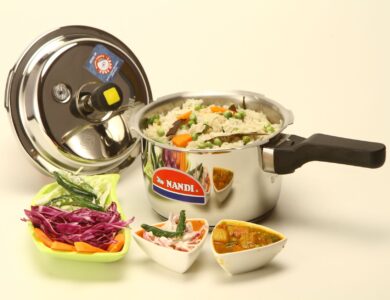
Indian pressure cookers rely on two separate safety valves that operate through different mechanical principles to prevent dangerous over-pressurization. The primary weight valve regulates cooking pressure by lifting at a set point, while the secondary fusible plug acts as a thermal failsafe that melts if temperatures exceed safe limits.
Understanding how these devices function requires distinguishing between pressure regulation and emergency relief, because they respond to different physical triggers. Safety standards like IS 2347 safety requirements mandate redundant protection systems so that a single component failure cannot cause catastrophic vessel rupture during normal stovetop use.
The primary regulator: weight valve vs spring valve
Traditional Indian pressure cookers typically use a weighted regulator rather than the spring-loaded valves common in Western models. This design choice reflects both manufacturing simplicity and the specific cooking pressures required for dals and rice at Indian altitudes.
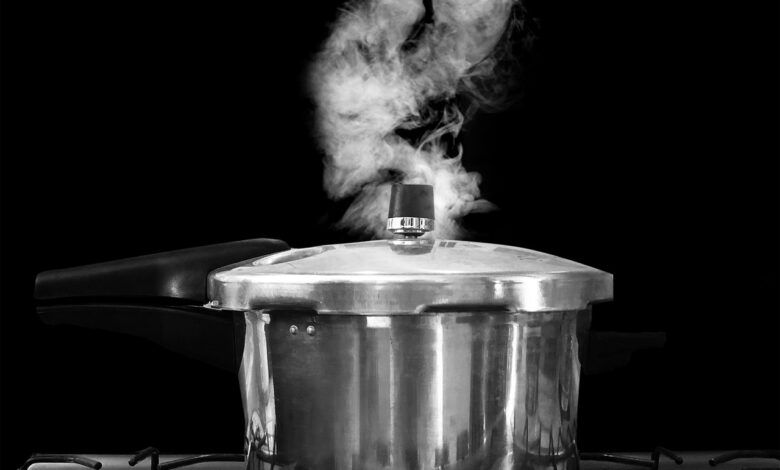
The weight valve sits loosely on a vent pipe and relies on gravity to maintain seal until internal steam pressure generates enough upward force to lift it. Once lifted, steam escapes in visible bursts that signal the cooker has reached operating pressure, then the weight settles back down as pressure drops slightly below the threshold.
This cyclical lifting creates the characteristic whistling sound that home cooks associate with proper operation. Spring valves, by contrast, use calibrated metal tension to hold a seal at precise pressures without visible steam release until maximum thresholds are exceeded, making them quieter but harder to monitor audibly during cooking.
The fusible plug: thermal safety through material science
The fusible plug serves as the last line of defense when the primary vent becomes blocked or heat input exceeds safe levels. It contains a core made from a low-melting-point alloy, typically bismuth-based, engineered to liquefy at temperatures around 130°C to 145°C rather than at specific pressure values.
This temperature-triggered design addresses scenarios where pressure might not rise proportionally to dangerous heat levels, such as when food burns onto the base while blocking steam pathways. When the alloy melts, it creates an immediate pressure release path through the lid that prevents vessel explosion even if the main vent is completely obstructed.
The fusible plug melting point is deliberately set above normal cooking temperatures but below the threshold where aluminum or stainless steel loses structural integrity. This ensures the plug activates only during genuine thermal emergencies rather than during standard high-pressure cooking cycles.

Gasket release systems: the third safety layer
Modern Indian cookers incorporate a gasket release system that functions as tertiary protection when both primary and secondary valves fail simultaneously. The rubber sealing ring is designed to deform outward under extreme pressure, breaking the lid seal before the metal vessel reaches bursting strength.
This gasket release system works because elastomers compress and extrude at predictable pressure thresholds that engineers calibrate during manufacturing. The deformation creates a controlled leak path around the lid rim rather than allowing pressure to build toward catastrophic metal fatigue.
Cookers lacking this feature depend entirely on metal-to-metal seals that can withstand pressures far beyond safe limits before failing violently. Buyers should verify gasket-release capability when purchasing, especially for larger capacity vessels where stored energy increases proportionally with volume.
Why IS 2347 mandates redundant protection
The Bureau of Indian Standards requires multiple independent safety mechanisms because no single device can guarantee reliability across years of daily use and variable maintenance conditions. IS 2347 safety requirements specify testing protocols that simulate blocked vents, overheating, and gasket degradation to validate each protection layer functions independently.
These standards recognize that home cooks may neglect cleaning vent pipes, replace gaskets with incompatible parts, or apply excessive heat during impatient cooking sessions. Redundancy ensures that human error or component wear in one system does not eliminate all protection against over-pressurization.
Certification marks on cooker bases indicate compliance with these multi-layer safety tests rather than mere pressure-holding capacity. Uncertified vessels may withstand normal operating pressures but lack validated emergency relief pathways for abnormal conditions.
| Valve Type | Trigger Mechanism | Primary Function |
|---|---|---|
| Weight Valve | Steam pressure lifts weight | Regulates cooking pressure |
| Spring Valve | Calibrated spring tension | Precise pressure control |
| Fusible Plug | Alloy melts at ~130–145°C | Thermal emergency relief |
| Gasket Release | Rubber deforms under pressure | Tertiary over-pressure protection |
Maintenance practices that preserve safety function
Safety valves lose effectiveness when food residue blocks vent passages or when replacement parts deviate from original specifications. Cleaning the weight valve and vent pipe after every use prevents starch buildup that can restrict steam flow and delay pressure regulation.
Fusible plugs should be inspected annually for signs of partial melting, discoloration, or corrosion that indicates prior thermal stress. Any plug showing deformation must be replaced immediately with manufacturer-specified parts rather than generic alternatives that may have incorrect melting points.
Gaskets require replacement every 12 to 18 months depending on usage frequency, as hardened rubber loses the elasticity needed for proper sealing and emergency release. Using non-OEM gaskets risks altering the pressure threshold at which the release system activates, potentially defeating its protective function.
Practical safety verification
Before each use, verify that the weight valve moves freely on its seat and that the vent pipe is clear of obstructions by holding it up to light. Test the gasket seal by closing the lid without heat and checking for even compression around the entire rim rather than gaps or bulges.
Monitor cooking behavior for warning signs like continuous steam leakage around the lid, failure to reach pressure within expected timeframes, or unusual odors suggesting burning food or degraded components. These indicators often precede safety system activation and warrant immediate inspection rather than continued use.
Replace any cooker showing cracks, warping, or corrosion on the lid or body regardless of valve condition, as metal fatigue compromises pressure containment independently of safety devices. Structural integrity forms the foundation upon which all valve-based protections depend.
Understanding Your Cooker’s Safety Systems
Indian pressure cookers protect users through three independent mechanisms: weight-regulated pressure control, temperature-triggered fusible plugs, and pressure-sensitive gasket release systems. Verify certification marks and inspect valves before each use to ensure all protection layers remain functional. Neglecting maintenance transforms engineered safety features into false security that fails precisely when needed most.
Frequently Asked Questions
How often should I replace the fusible plug in my pressure cooker?
Inspect the fusible plug annually for discoloration or deformation indicating thermal stress, replacing immediately if damaged. Most manufacturers recommend preventive replacement every two to three years regardless of visible condition to ensure reliable emergency activation.
Can I use a heavier weight to increase cooking pressure safely?
Never substitute weights because higher mass raises operating pressure beyond the vessel’s certified design limits. Exceeding rated pressure risks gasket failure, metal fatigue, or explosive rupture that safety valves cannot prevent at unauthorized thresholds.
What happens if both the weight valve and fusible plug fail simultaneously?
The gasket release system provides tertiary protection by deforming outward to create a controlled leak path before catastrophic pressure builds. This redundancy ensures safe pressure relief even when primary and secondary mechanisms are compromised or blocked.
Why does my pressure cooker whistle continuously instead of intermittently?
Continuous whistling indicates excessive heat input overwhelming the weight valve’s regulation capacity rather than normal cyclic operation. Reduce flame immediately to restore proper cycling and prevent unnecessary thermal stress on safety components.