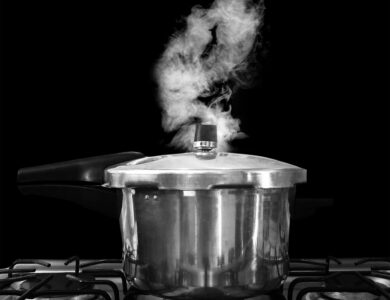

Induction cooktops require a pressure cooker with a magnetic base plate, typically made from AISI 430 stainless steel, to generate the eddy currents necessary for heating. Standard non-magnetic stainless steel vessels will not activate the burner because they lack the ferrous material required to complete the electromagnetic circuit.
Finding the best induction compatible pressure cooker for Indian cooking means selecting a vessel with a properly bonded triply bottom that distributes heat evenly across the entire base rather than just at the center. Technical specifications like IS 1662 stainless steel standards define minimum thickness and bonding quality requirements that separate durable induction bases from thin plates that warp or detach after repeated thermal cycling during daily dal and rice preparation.
How induction base construction affects cooking performance
Induction compatible pressure cookers use a sandwich bottom construction where a magnetic ferritic steel disc is encapsulated between layers of aluminum and austenitic stainless steel. This triply structure serves dual purposes: the outer magnetic layer couples with the induction field while the inner aluminum core spreads heat laterally to prevent hot spots that scorch thick gravies common in Indian cuisine.
The thickness of this sandwich bottom directly determines thermal mass and temperature uniformity during high-pressure cooking cycles. Bases measuring less than 4mm total thickness tend to develop localized overheating zones that trigger premature whistling while leaving food undercooked at edges, whereas 5mm to 6mm constructions maintain stable temperatures through better heat distribution and retention characteristics essential for proper grain gelatinization.
Bonding integrity matters as much as thickness since delamination creates air gaps that act as thermal insulators between the induction plate and cooking surface. Quality manufacturers use impact bonding or friction welding processes that create metallurgical bonds surviving thousands of heating cycles, while cheaper adhesive-bonded bases fail within months as differential expansion separates layers and eliminates effective heat transfer entirely.
Magnetic grade requirements for reliable induction coupling
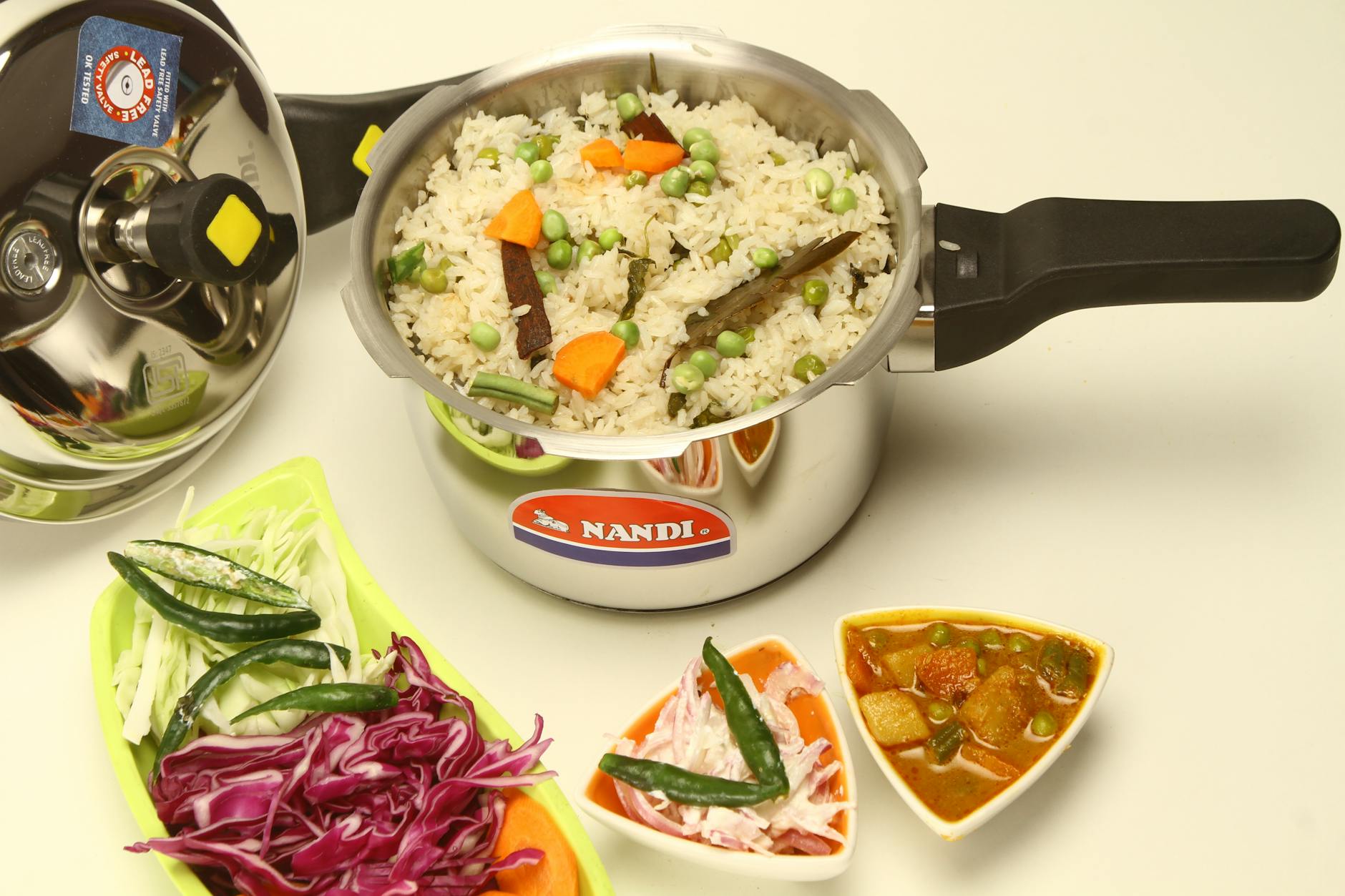
AISI 430 ferritic stainless steel provides the magnetic permeability needed for efficient induction heating while maintaining adequate corrosion resistance for kitchen environments. This grade contains 16-18% chromium with minimal nickel content, creating a body-centered cubic crystal structure that responds strongly to alternating magnetic fields generated by induction coils beneath the cooktop surface.
Some manufacturers substitute lower-grade magnetic steels or iron alloys to reduce costs, but these materials corrode rapidly when exposed to moisture and acidic foods during storage or cleaning. Genuine 430 grade maintains structural integrity and magnetic properties indefinitely under normal use conditions, whereas inferior substitutes develop rust patches that weaken magnetic coupling efficiency and contaminate food contact surfaces over time.
The magnetic response can be verified simply by testing whether a standard refrigerator magnet adheres firmly to the cooker’s exterior base surface. Weak or inconsistent attraction indicates insufficient ferrous content or poor bonding quality that will result in inefficient heating, extended cooking times, and potential cooktop error messages when the system cannot detect adequate load impedance.
Safety considerations specific to induction pressure cooking
Induction cooktops heat vessels faster than gas or electric resistance elements, reaching operating pressure in significantly less time than traditional methods. This rapid pressurization demands safety valves and gaskets rated for higher thermal shock loads since temperature differentials between base and lid develop more quickly during initial heating phases compared to conventional stovetop sources.
Flat-bottom geometry required for induction compatibility eliminates the curved base profiles found on gas-specific cookers that naturally accommodate flame spread patterns. This geometric constraint means induction-compatible vessels must achieve seal integrity through precise machining tolerances rather than relying on flexible base deformation, making manufacturing quality control more critical for preventing steam leaks during high-pressure operation.
Weight distribution becomes important since induction cooktops have maximum load limits and glass ceramic surfaces vulnerable to point stress concentrations. Overly heavy cookers exceeding 4-5kg when filled risk damaging delicate cooktop surfaces during placement or sliding movements, so selecting appropriately sized vessels within manufacturer weight specifications protects both equipment warranty coverage and user safety during routine handling.
| Feature | Quality Standard | Budget Compromise |
|---|---|---|
| Base Thickness | 5–6mm triply | 3–4mm single plate |
| Magnetic Grade | AISI 430 certified | Unspecified iron alloy |
| Bonding Method | Impact/friction welded | Adhesive bonded |
| Flatness Tolerance | <0.5mm deviation | >1mm warpage |
Selecting appropriate capacity and design features
Indian family cooking typically requires 5-liter to 7-liter capacity vessels to accommodate expansion ratios for dals, rice, and vegetables during pressure cycles. Smaller 3-liter models suit bachelor households or side dish preparation but prove inadequate for main meal cooking where headspace requirements demand larger volumes to prevent vent blockage and ensure safe pressure regulation.
Lid locking mechanisms should feature positive engagement indicators visible without bending down to inspect seal status at floor level. Designs requiring rotational alignment marks or audible click confirmation reduce guesswork during closure and provide tactile feedback that proper sealing has been achieved before heat application begins, preventing dangerous steam escapes from misaligned lids during pressurization.
Handle ergonomics matter significantly since induction-compatible cookers with thick triply bases weigh considerably more than equivalent gas-specific models. Heat-resistant phenolic or silicone-overmolded handles positioned for balanced lifting distribute weight comfortably during transfer operations, while thin metal handles transmit heat rapidly and create grip challenges when moving fully loaded vessels from cooktop to sink or serving area.
Making the Right Choice for Your Kitchen
The best induction compatible pressure cooker for Indian cooking combines verified AISI 430 magnetic base construction with 5mm+ triply sandwich thickness and impact-bonded layer integrity certified to relevant standards. Test magnetic response and examine base flatness before purchase rather than relying solely on marketing claims about induction readiness that may not reflect actual performance under sustained high-heat cooking conditions. Investing in properly specified equipment prevents both cooking failures and premature replacement costs that accumulate when budget compromises sacrifice functional durability for superficial appearance.
Frequently Asked Questions
Can I use my existing gas pressure cooker on an induction cooktop?
Only if the base contains sufficient magnetic material to couple with induction fields, which most gas-specific aluminum or non-magnetic steel cookers lack. Test with a strong magnet; firm adhesion indicates compatibility while weak or no attraction confirms the vessel will not function on induction surfaces.
Does induction cooking damage pressure cooker gaskets faster than gas?
Rapid induction heating can accelerate gasket aging if vessels reach pressure too quickly without gradual warmup periods allowing even thermal distribution. Using medium power settings during initial pressurization extends gasket lifespan comparably to gas cooking while still benefiting from induction’s precise temperature control once operating pressure stabilizes.
Why does my induction cooker whistle inconsistently compared to gas?
Inconsistent whistling typically indicates uneven base contact or insufficient thermal mass causing localized steam generation rather than uniform boiling throughout the vessel. Verify base flatness against a straight edge and consider upgrading to thicker triply construction if current cooker shows warping or uses thin single-layer magnetic plates.
Are hard-anodized aluminum pressure cookers suitable for induction?
Standard hard-anodized aluminum lacks magnetic properties required for induction coupling unless specifically manufactured with embedded steel base plates. Check product specifications for explicit induction compatibility markings since visual appearance alone cannot confirm presence of necessary ferrous components hidden beneath anodized surface coatings.