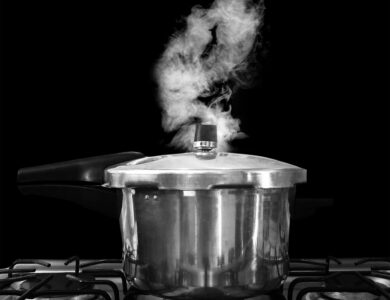
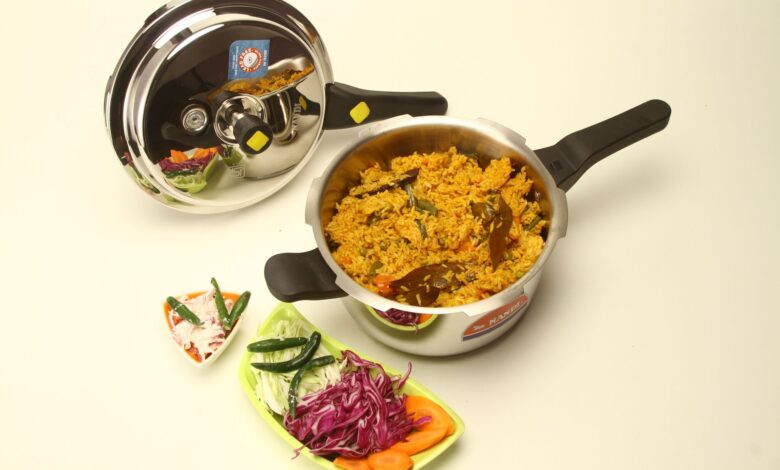
A 5-litre pressure cooker typically serves a family of four in India better than a 3-litre model because it accommodates both daily dal and rice with adequate headspace for safe pressurization. The extra capacity prevents overfilling during expansion-heavy cooking while remaining manageable on standard domestic gas stoves.
Selecting the right size requires matching vessel volume to your specific meal patterns rather than relying solely on household headcount or generic sizing charts. Safety standards like IS 2347 pressure cooker specifications define maximum fill lines that reduce usable capacity by roughly one-third, meaning a 3-litre vessel effectively holds only about 2 litres of expanding ingredients during active cooking cycles.
Understanding usable capacity versus rated volume
Pressure cooker manufacturers rate vessels by total internal volume including headspace required for steam generation and safety valve operation. This rated capacity differs significantly from practical cooking volume since filling beyond two-thirds creates dangerous conditions where food can block vent pipes or cause excessive pressure buildup during heating phases.
A 5-litre cooker therefore provides approximately 3.3 litres of usable space for dal, rice, or vegetables that expand during cooking, which comfortably handles meals for four people without approaching safety limits. A 3-litre model offers only 2 litres of functional capacity, making it suitable for side dishes or single-serving preparations but inadequate as the primary vessel for family-sized staple foods.
This distinction matters most when cooking foaming ingredients like chana, rajma, or idli batter that require additional clearance above the liquid level. Underestimating expansion needs forces users to cook in multiple batches or risk safety mechanism activation, both of which defeat the efficiency purpose of pressure cooking in busy Indian kitchens.
Daily cooking requirements for Indian families of four
Standard meal preparation for four people typically involves 500g to 750g of dry dal or rice plus water, occupying roughly 2.5 to 3 litres after accounting for expansion ratios. A 5-litre cooker accommodates this volume with sufficient margin for safe operation, while a 3-litre vessel operates at or near maximum fill limits that compromise both safety and cooking consistency.
Vegetable preparations present different volumetric challenges since leafy greens and fibrous items occupy significant space before reducing during cooking. The wider base diameter of 5-litre models allows better layering of mixed vegetables without compression that causes uneven cooking, whereas narrower 3-litre vessels force stacking that produces mushy bottom layers and undercooked tops.
Families who prepare one-pot meals combining grains, lentils, and vegetables benefit even more from the larger format’s thermal mass and surface area. The increased volume maintains stable pressure through longer cooking cycles required for complex dishes, reducing the frequency of heat adjustments needed to prevent scorching in smaller vessels with less thermal inertia.
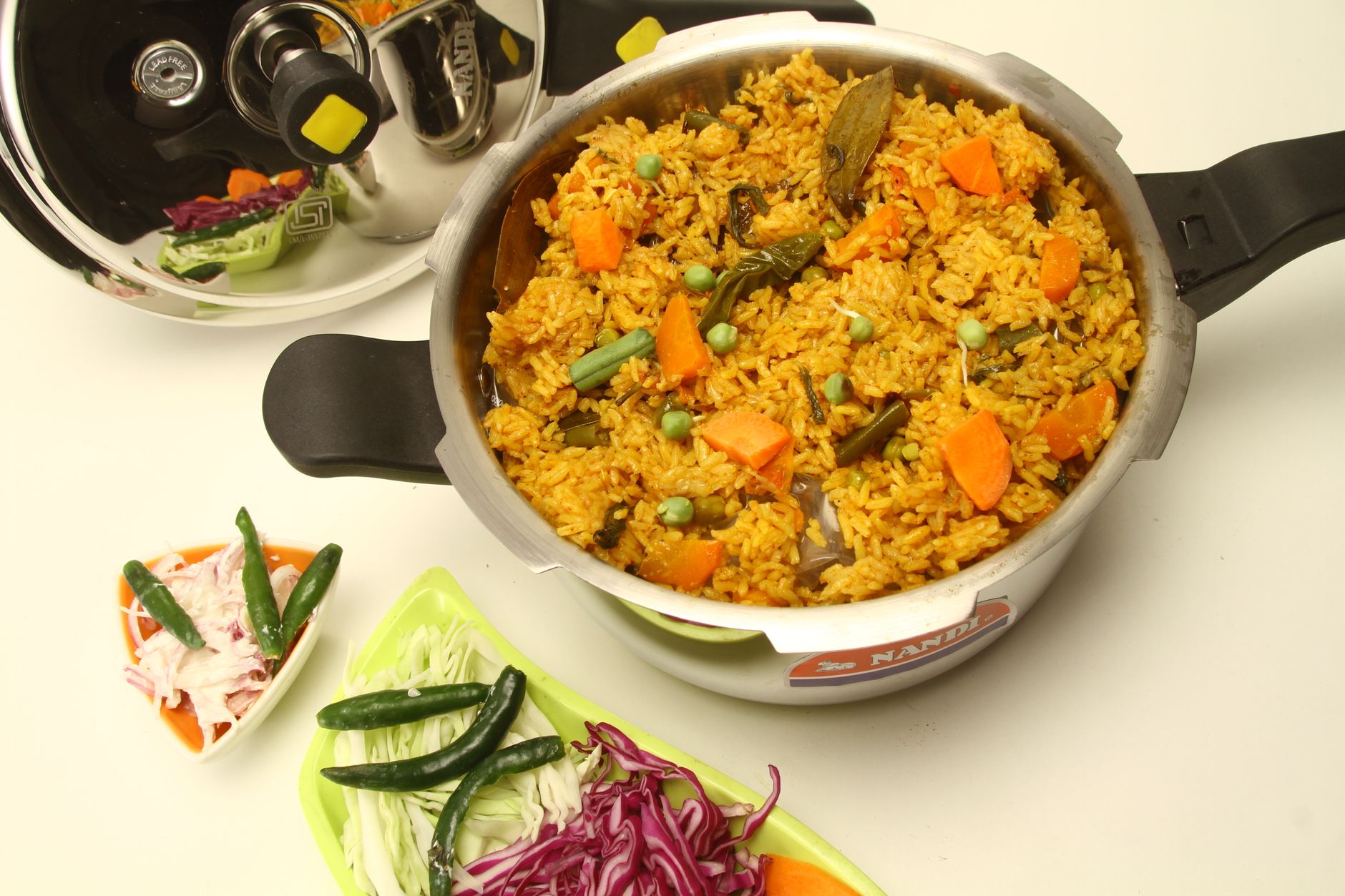
When a 3-litre cooker makes sense
Smaller vessels excel as secondary cookers for preparing accompaniments like sambar, rasam, or vegetable sides while the main cooker handles rice or dal. This parallel cooking strategy maximizes stove efficiency during meal preparation windows where timing coordination matters more than individual vessel capacity.
Single-person households or couples without children may find 3-litre models adequate for daily staple cooking if portions remain modest and expansion-heavy ingredients are prepared separately. The reduced weight and faster heat-up times benefit users who prioritize quick reheating of pre-soaked ingredients over batch cooking for multiple meals.
Specialized applications like steaming idlis, making small-batch pickles, or preparing infant food justify owning a dedicated smaller cooker alongside the primary family vessel. These tasks often require precise temperature control and shorter cooking times that larger vessels cannot provide efficiently due to their greater thermal mass and slower response to heat adjustments.
Material and construction considerations across sizes
Stainless steel triply construction distributes heat more evenly across larger base diameters, reducing hot spots that cause scorching in 5-litre vessels used for thick gravies or dense dals. Single-layer aluminum or thin-gauge steel models in larger sizes develop significant temperature gradients that require constant stirring or heat modulation to prevent burning at the center while edges remain undercooked.
Gasket sealing performance varies with lid diameter since larger circumferences demand higher clamping force to maintain uniform compression against the pot rim. Quality 5-litre models incorporate reinforced locking mechanisms and thicker gaskets designed for the increased stress, whereas budget options may leak steam prematurely as components wear under mechanical loads specific to larger formats.
Weight differences between sizes affect daily usability, especially for users with limited grip strength or wrist mobility concerns. A fully loaded 5-litre stainless steel cooker can exceed 6kg, making pouring and cleaning physically demanding compared to lighter 3-litre alternatives that remain manageable even when filled to capacity with liquids.
| Family Size | Recommended Capacity | Primary Use Case |
|---|---|---|
| 1–2 persons | 3 litres | Daily staples, side dishes, reheating |
| 3–4 persons | 5 litres | Main meals, batch cooking, expansion foods |
| 5–6 persons | 7.5 litres | Large families, festive cooking, meal prep |
| Secondary cooker | 2–3 litres | Accompaniments, steaming, specialized tasks |
Making the Right Choice for Your Household
A 5-litre pressure cooker suits most Indian families of four as the primary vessel for daily staple cooking, providing adequate capacity for expanding ingredients while maintaining safe operating margins. Consider adding a 3-litre secondary cooker for parallel preparation of accompaniments rather than downsizing the main vessel below functional requirements.
Evaluate your actual cooking patterns over two weeks before purchasing, noting peak volumes during festival seasons or guest occasions when demand exceeds daily norms. Investing in appropriately sized equipment based on observed usage prevents both safety compromises from chronic overfilling and fuel waste from repeatedly heating oversized vessels for small portions.
Frequently Asked Questions
Can I cook for four people in a 3-litre pressure cooker?
A 3-litre cooker can handle side dishes or small portions for four but lacks capacity for main staples like dal or rice at family scale. You will need to cook in multiple batches or supplement with additional vessels to complete full meals safely.
Does a larger pressure cooker consume significantly more fuel?
Fuel consumption increases moderately with size, but cooking larger batches in one vessel uses less total energy than multiple small-batch cycles. The thermal efficiency gain from single-pass cooking typically offsets the marginal increase in heat-up time for properly loaded 5-litre cookers.
Is a 5-litre cooker too heavy for daily use?
Empty 5-litre stainless steel cookers weigh 2–3kg, becoming heavier when filled but remaining manageable for most adults during routine handling. Users with grip limitations should consider aluminum models or ergonomic handle designs that distribute weight more comfortably during lifting and pouring motions.
Should I buy one large cooker or two smaller ones?
One 5-litre primary cooker plus one 3-litre secondary provides optimal flexibility for Indian family cooking without redundant capacity. This combination handles simultaneous main and side dish preparation more efficiently than two identical mid-size vessels that cannot accommodate large-batch staple cooking individually.