You may think that any sharpener will work effectively on your kitchen knife — but use the wrong one and you could end up with a dull blade. Whetstones, manual pull-through device, and electric sharpeners all remove metal, but they interact with the steel in different ways.
This comparative analysis is done through before-and-after measurements of edge angle, a close-up assessment of the construction and a checklist comparing knife sharpness.
At a Glance
- This article compares three sharpener types on stainless-steel Indian kitchen knives using before/after edge-angle measurements.
- You’ll get a sharpener-to-blade matching checklist that ties the tool to your knife’s steel hardness.
- The core trade-off: control (whetstone) vs. speed (pull-through) vs. consistency (electric) — each has a place, but only if matched correctly.
Typical stainless-steel kitchen knives in Indian homes — vegetable knives, chef’s knives, and the occasional coconut cleaver — have blade hardness ranging from soft (HRC 52–54) to medium-hard (HRC 56–58). Sharpener prices span from ₹500 for basic pull-through models to over ₹5,000 for electric units and quality whetstone sets. This decision framework applies to home cooks who sharpen knives 2–4 times a year, not to professional chefs or collectors.
Why your knife’s steel grade dictates your sharpener choice

The grade of the steel referred to as “18/8” or “18/10” is more than just a guarantee of resistance to rust. It implies about the toughness of the blade, which directly determines the quantity of metal that the sharpener removes and how fine the edge can be.
Softer steels (usually used in cheap Indian kitchen knives) require light abrasives, while harder steels need much coarser abrasives but keep their edge longer.
The grade designations in the BIS standards for stainless steel utensils determine the properties, in turn accounting for the disappointments faced. For instance, a user on the Straight Dope Message Board complained that “pull-through sharpeners take chunks” of the blade.
In reality, the ripping occurs, because the low-carbon, softer stainless steel (HRC 52-54) is characterized by low yield strength; carbide cutting heads do not cut cleanly — instead gouging the steel and producing jagged burrs that get folded over after a few usages.
Refer to the steel-grade identification checklist in our guide to Kitchen Tool Steel Grades Explained to find out about your knife’s stamp. Check the knife you use most often for finding a stamped grade; if there is no such stamp, assume it is a softer steel.
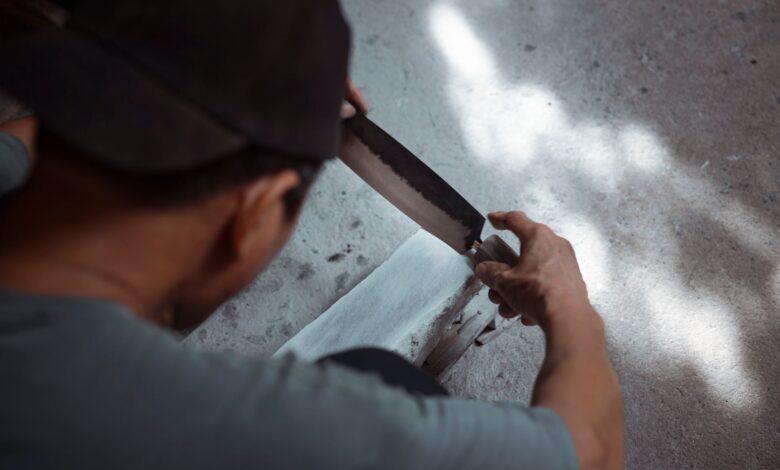
Whetstone: control and precision for softer and harder steels alike

Since a whetstone allows precise control over the edge angle (common angle is 15-20 degrees for kitchen knives) and select the appropriate grit size according to the steel being used.
Softer steels (HRC 52-54) should be sharpened using medium grit (approximately 800) and light pressure to prevent excessive sharpening. Harder steels (HRC 56-58) can be sharpened using finer grit (1000+) and obtain razor-like edge.
There is a trade-off involved in this technique, which is the ability to control the angle because inconsistencies in the angle lead to producing a blunt edge that does not cut.
Both the brands of knives mentioned above advise people to choose appropriate grit of whetstones according to their knives in order to prevent unnecessary loss of metals during sharpening.
A proper whetstone has to exhibit very dense and fine structure while anything coarse is not capable of being precise and can lose metals very fast.
Try this before you buy: practice on an old, cheap knife first — if you can consistently hold a 20° angle across the full blade length, a whetstone is a viable option for you.
Pull-through sharpeners: speed and convenience, but at what cost?
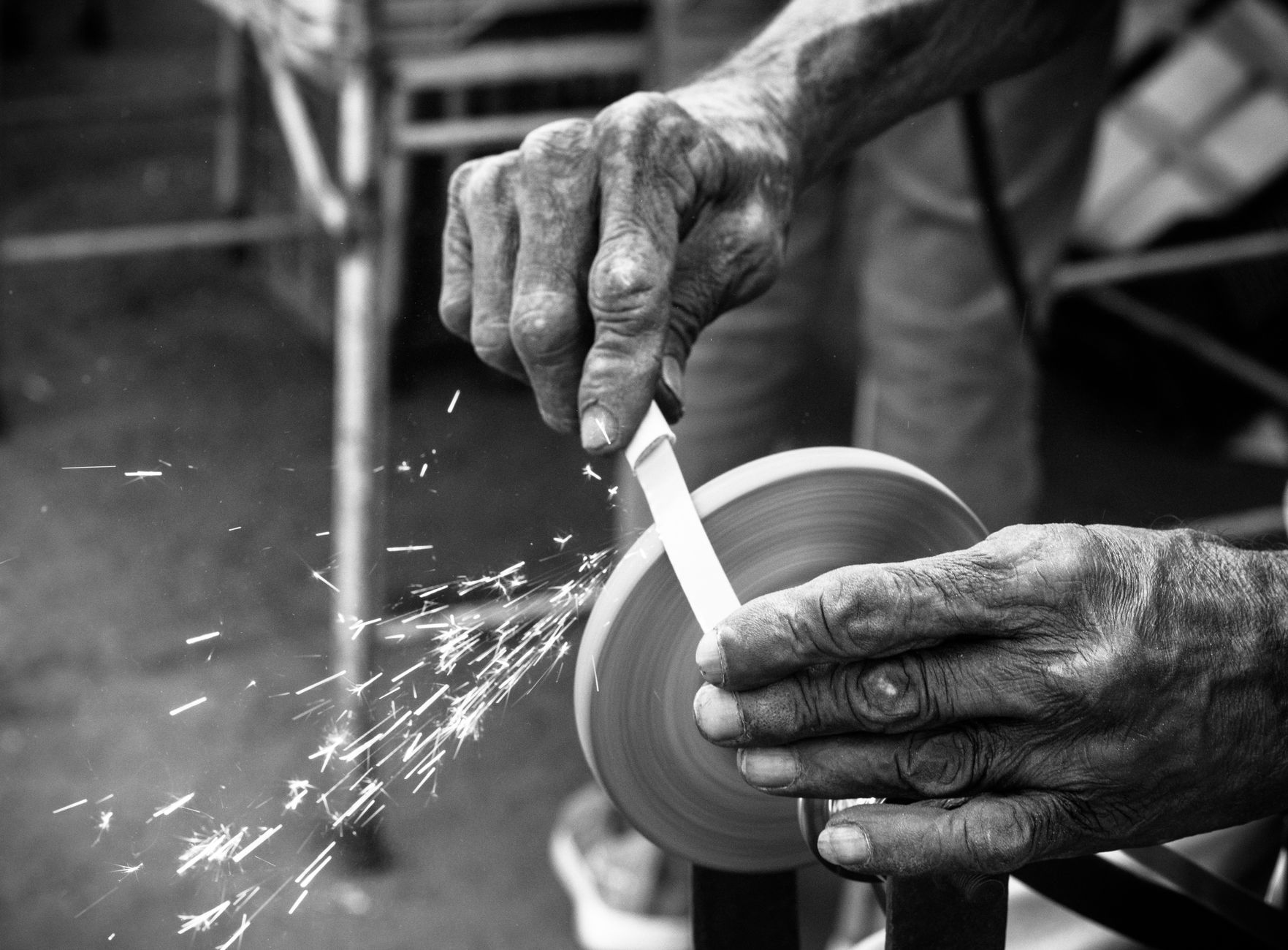
Pull-through sharpeners are the most popular sharpener in Indian households because of their being cheap and easy to use. The principle of functioning of this sharpener is that the user has to pull the knife through a V-shaped slot, and thus the knife receives sharpening.
However, this sharpener has an obvious drawback that is that it removes the metal too aggressively without caring about specifics of the knife metal and angle of sharpening.
Independent testing by Serious Eats confirms that carbide pull-through models remove more metal per pass than whetstones.
Unlike ceramic sharpeners, pull-through sharpeners with carbide heads can lead to micro-chipping in harder steels (HRC 56+): go for a ceramic version and use light and steady pressure if you want to use one of those.
Electric sharpeners: consistency with a hidden downside

Electric sharpeners (₹2,000-₹5,000+) have the benefits of pre-set angles and mechanical sharpening, but that advantage comes with a large price.
The electric sharpeners typically shave off about 0.2 mm of metal each time they are used, which is rather considerable in regard to the fact that at least some kitchen knives can be made just 2-3 mm thick around the bolster.
Thus, for a knife that is sharpened no more than twice a year, it means that over 0.4 mm of the blade is being removed over the course of the year. In other words, it will take about five years for the cutting edge of a two-millimeter blade to be ground down to nothing.
According to the information from Work Sharp, these metal removal standards have been confirmed in practice.
An example of such a negative experience is the comment, “Nice edge, but only if you are OK with taking off 0.2mm each time” left by a user on Althacker News.
As far as soft Indian stainless steels are concerned, such removal can also lead to overheating of the blade and loss of temper.
There is a big difference between what manufacturers say and what independent testers think: while the former highlight the ease of using such sharpeners and their ability to produce “professional results,” the latter pay attention to significant removal of metal, which is all explained by the differences in the definitions of sharpness.
Sharpener-to-blade matching checklist: find your fit

Make use of it before you make your next sharpener purchase or determine if the one already purchased is doing more harm than good.
Step 1: Identify Your Blade Steel
- Check for a stamped grade (18/8, 18/10, etc.). If absent, it means the steel is soft with HRC 52–54.
- Do magnet test: the 18/0 steels are magnetic while the 18/8 and 18/10 steel is either weakly magnetic or not magnetic.
Step 2: Determine Your Sharpener Usage
- Daily or weekly → seek a method which removes the least material (whetstone).
- Monthly or quarterly → electric or top-end pull-through is okay.
- Once or twice a year → any method is suitable but whetstone is best for preserving the blade life.
Step 3: Choose the Sharpener
| Blade hardness | Recommended sharpener | Why |
|---|---|---|
| Soft (HRC 52–54) | Whetstone (medium grit, 800) | Gentle abrasion preserves the edge without tearing |
| Medium (HRC 54–56) | Whetstone (fine grit, 1000+) or ceramic pull-through | Balances control with convenience |
| Hard (HRC 56–58) | Whetstone (fine grit) or guided electric system | Requires precision; aggressive sharpeners cause chipping |
Hardness levels of steels and grits suggested are approximate only and it should be understood that some techniques would be more successful than others. The price of different sharpener types varies between ₹500 to ₹5,000 as of July 2026 but it is recommended to check prices before purchase.
The common mistake: buying a sharpener for the knife you wish you had
It is common that consumers buy a sharpener for their ideal knife which they want to collect rather than the one they actually use daily.
While a ₹500 pull-through sharpener could work for a stainless-steel vegetable knife, it would give disastrous results for a carbon-steel one. In contrast, a ₹5,000 electrical machine might be too much for a knife that isn’t often used.
The main thing is to select tools that correspond with the steel you are using rather than what knife it has to be made of.
Keeping your edge: care practices that extend sharpness
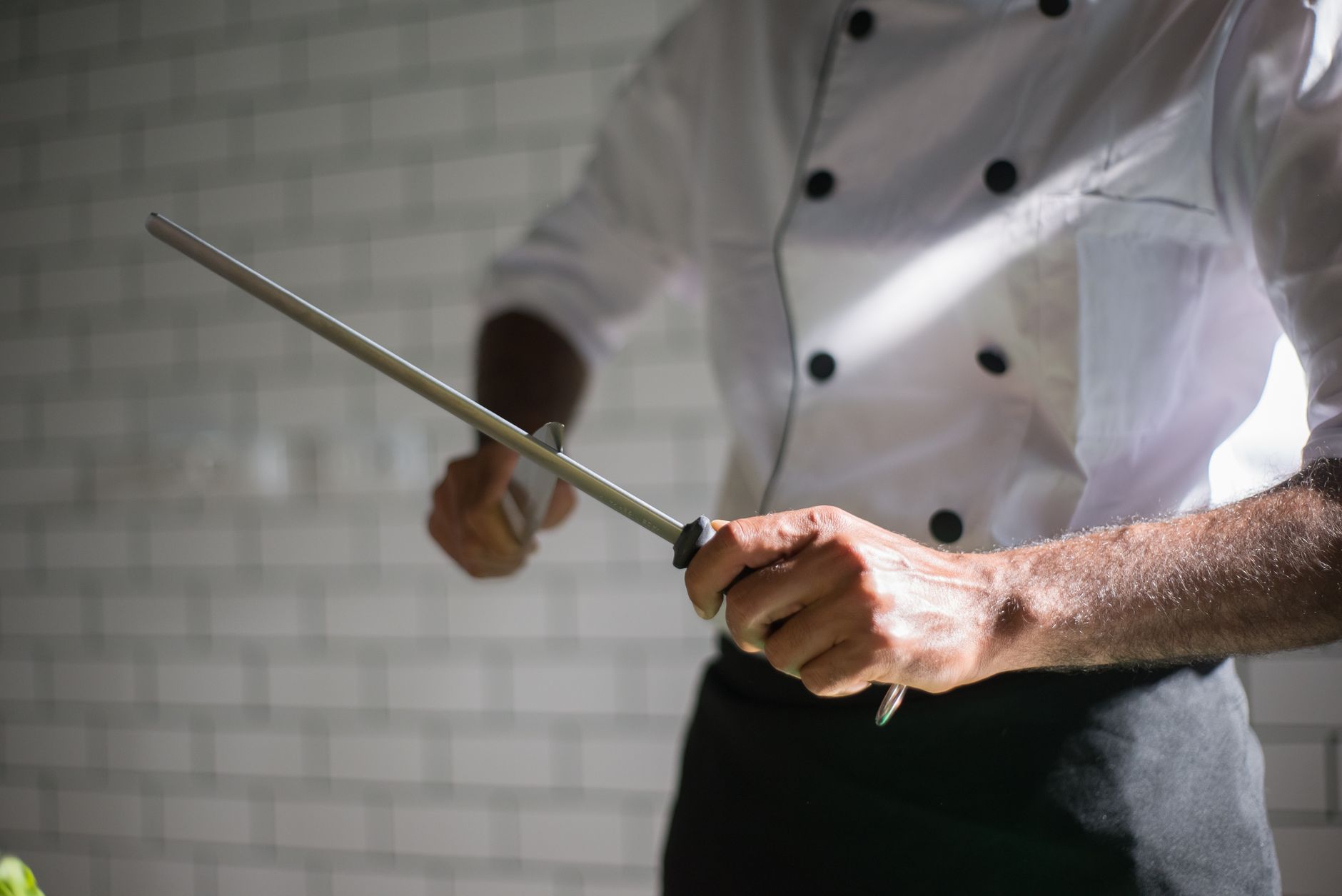
Sharpening removes metal; honing straightens the existing edge.
If honing is done regularly, the sharpening stage could be delayed for quite a long period. This is especially important with some knives made from less durable metals.
When honing, make sure to keep the angle used in sharpening and don’t use a pull-through sharpener for it as it will remove metal, which means more trouble for your knife.
After honing regularly for a few months, a person can continue using a knife without sharpening it.
It is crucial not to sharpen the knife right after it has been cleaned because of the thermal shock that might make it crack, especially in the case of hard steel knives. Thus, before making the knife ready the person needs to let it dry naturally.
The Serious Eats guide to honing explains the angle and pressure techniques that preserve your edge.
Final Thoughts
It is not a matter of picking the most expensive sharpener but rather the one that fits the knife material. Check what the material is stamped on the blade, check how often you sharpen the knife, and pick your sharpener. The whetstone is a way to keep the knife for a long time as it is right to take care of it.
Frequently Asked Questions
Is it possible to use a whetstone for sharpening my Indian stainless-steel knife?
Yes — it’s the safest option for preserving blade life. Start with a medium grit (around 800) and use light pressure to avoid over-grinding the softer steel common in many Indian kitchen knives.
How often should I sharpen my vegetable knife on a daily basis?
For daily use, honing before each session and sharpening every 2–3 months works well. Softer steels may need monthly sharpening because they lose their edge faster.
Will electric sharpeners ruin my coconut cleaver?
It can, especially if the cleaver has soft steel. Aggressive metal removal and heat can weaken the edge, so a whetstone or guided manual system is safer.