
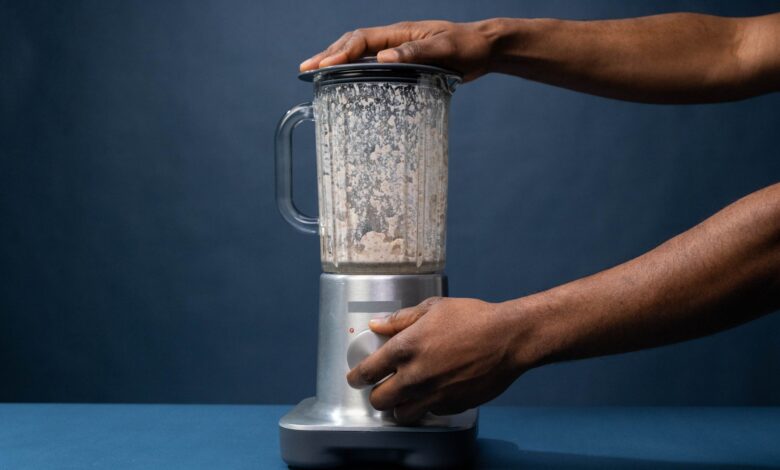
Many shoppers think that the higher the power rating of a particular blender, the better the blending capability it will have (the capability to blend thicker batters and chutneys). Actually, blade design and sustained torque are more important for the thick batters and chutneys used in Indian cooking than is the number on the box. A well-designed 300‑watt hand blender will work through a dense mixture, while a poorly designed 500‑watt hand blender may stop working completely when the mixture becomes too thick. The main reason for this difference is how the motor performs under load.
There is no way to see this difference by looking at the packaging. The maximum wattage rating is a momentary surge of energy and is not an accurate indication of the amount of work the motor can do when submerged in thick batter. The sustained power produced by the motor and the blade geometry will ultimately determine whether your chutney or batter will be smooth or gritty, not the headline number on the packaging. Learning how to evaluate these two factors before purchasing a hand blender will help you avoid purchasing one that will quit working when you need it the most.
Key Takeaways
- Higher wattage doesn’t guarantee better chutney or batter performance — sustained RPM under load and blade design matter as much or more.
- A 4-leaf stainless steel blade creates more cutting surfaces but can stall in thick batter if the motor lacks torque; 2-leaf designs often circulate better in dense mixtures.
- Stainless steel shafts resist corrosion and won’t discolour; plastic jars are lighter but can scratch and absorb odours over time.
- Look for BIS/ISI certification under IS 302 (Part 2/Section 14) — it’s mandatory for hand blenders sold in India and covers electrical safety.
- The practical deliverable at the end of this article is a blend-performance inspection checklist you can use before buying.
For a home cook in India making idli/dosa batter in 1–2 kg batches and coconut chutney weekly, a hand blender’s ability to handle thick, viscous loads depends less on the marketed wattage figure and more on sustained motor torque under load, blade geometry that creates proper circulation, and shaft material that withstands the abrasive action of coconut and urad dal.
Why wattage numbers on the box don’t tell the full story
Manufacturers of hand blenders tend to advertise their highest peak wattage (such as 500W,750W or even 1000W) in large letters on the packaging, however, this number normally does not reflect how the blender will actually perform during the course of a normal day.
Wattage at peak performance typically occurs at the very beginning when the blender is turned on with nothing in it, for a brief instant, before any load is placed in the blender.
The true measure of whether or not a blender has enough power to blend through a thick jar of coconut chutney or Idli batter is sustained wattage (the amount of power able to be maintained under load) and torque (the amount of force that will be applied to turn the motor).
For example, a 500W universal motor hand blender may not be able to handle the load of mixing a thick batter whereas a 300W AC motor unit with an efficient blade design can continue mixing the batter for an extended period and never overheat.
Experts will say that what is important is the number of minutes an electric motor can sustain RPMs when run with a heavy load, as well as the amount of torque placed upon the motor that will keep it from burning out how long the motor can sustain that RPM and the torque stresses it can handle while it is working.
The performance metric that should be monitored is sustained RPM while under load — NOT the non-load RPMs printed on the packaging.
To assess the wattage of a blender’s motor, examine its label. Peak wattage (or the maximum amount of watts the blender can produce) is indicated, while the duty cycle shows how long the appliance can be used on a regular basis.
How blade design changes the game for chutney and batter
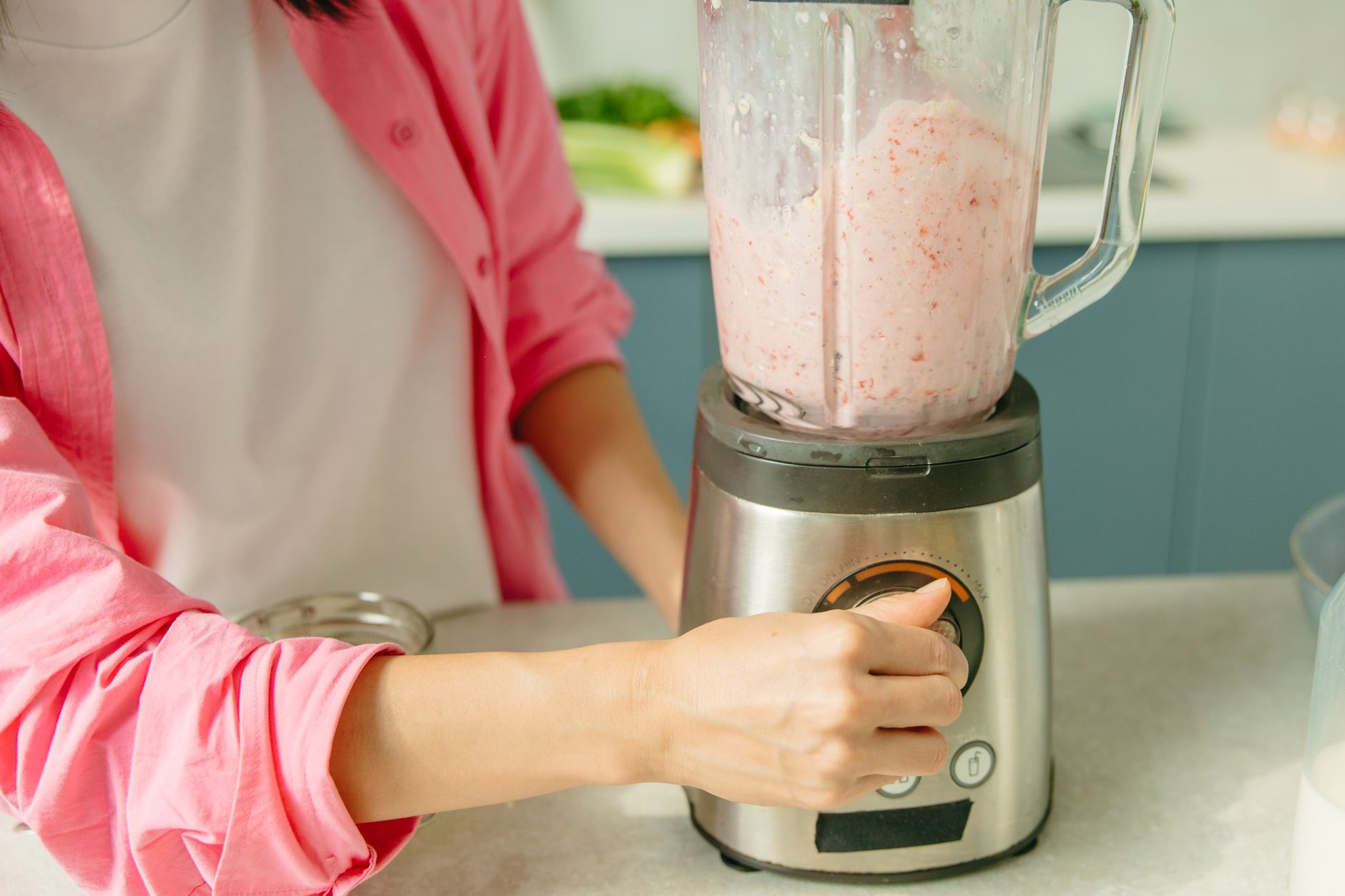
Both the number of blades on a hand blender and their configuration directly impacts how well they mix, process and create smooth, well-blended batters and chutneys.
The majority of consumer-level hand blenders are available in 2-blade and 4-blade (cross-blade) formats, while some premium quality models are also available as 3-blade.
A 2-blade system pushes the batter out and up, causing it to circulate, which is essential in achieving uniformity in idli/dosa batter. Circulation is the process where ingredients are drawn into the mixing area as they push outwards, meaning that fresh ingredients are continually loaded into the mixing area as the mixing occurs. Circulation is very important in idli and dosa batters where an even mix is critical.
A 4-blade design contains more cutting surfaces and hence a faster rate of processing food ingredients, making them great for soft ingredients. Their cross-shaped blades are also effective at mixing harder food products.
However, when using a cross blade blender for thick mixtures such as coconut chutney, an excess number of blades may hinder proper circulation. The torque produced by a blender will often not be enough to allow the blades to rotate quickly enough, so that the RPM drops significantly.
On Amazon.in, a recent buyer noted having experience “power lag while using chatni” on a 5-blade hand blender, due to the effect of the shape of the individual blades on circulation. A gull-wing shaped middle blade is an example of how changing the shape of the blade can help balance improved cutting ability with a lower impact on circulation. Too many blades for a given density of mixture will require more torque than a lot of motors can provide.
The material used in making the blades is another important consideration. 304 stainless steel (food-grade) has a resistance to corrosion from acidic chutneys and from abrasiveness of coconut and dal. Lower-cost options often provide a shorter lifespan for blades, resulting in rust and dullness occurring much faster than blades that have been manufactured using high-quality materials. Ultimately, the main cause for blades to dull is due to water getting into the shaft where it meets the motor.
The blade-count trade-off most buying guides skip
Many of the guides on the market regarding how many blades an immersion blender should have will always favour higher blade counts as being better.
However, while having more blades can speed up the blending time for thin liquids such as soups and smoothies, having fewer blades (2) has also been shown to yield better results when working with thicker batters and chutney since they create more of a vortex effect with less resistance.
In cooking styles that alternate between thin gravies and thicker pastes, the ideal configuration for an immersion blender would be one using an interchangeable head with a detachable blade system. Certain brands will have a specific chutney blade that has a unique design for that particular task, allowing you to use the blade that is most effective for the task at hand without having to settle for one size design.
Try this before you buy: if you are mainly using the immersion blender to make thicker chutneys and you find it has a four-blade cross design, check the motor wattage; it should be a minimum of 400W sustained, not peak; otherwise, you may have issues with the motor stalling.
If the blade head of your blender is unable to disconnect and is not adjustable for length or angle, you will have to use the same blade design for both thin and thick blending purposes. If you consistently make either, that may work for you; however, this limitation can be a disadvantage to people who will be alternating between both types of blends often.

Stainless steel vs. plastic: What the jar material actually affects
The portion of the immersion blender that is submerged in your food and does the mixing is called the blending shaft and is made from either high-quality plastic or Stainless Steel which have differing lifespans, durability, hygiene, and performance.
The blending shaft made from Stainless Steel is the most desirable choice for those who are cooking Indian food recipes. Stainless steel stick blenders do not become stained by turmeric or tamarind, resist corrosion due to acidic chutneys, and can be placed directly into a very hot pan without the risk of melting. They are also easier to clean and do not hold odours, which is important if you prepare garlic chutney one day and sweet lassi the next.
Plastic shafts are lighter and typically less expensive; however, because they scratch more easily and because they carry the aromas of the food being pulverized, over time, scratches will allow for bacteria to accumulate in the crevices. Strong odours also tend to remain in these scratched areas.
Some of the higher end plastics (Tritan etc.) are BPA free and very durable, but they do not have the same heat tolerance as stainless steel. After a few months of daily usage while making chutney, the plastic shaft will usually display obvious signs of wear, while the stainless steel shaft will remain odourless and smooth; this is due to the fact that the surface of stainless steel is non-porous.
The material of the jar (if your hand blender includes a separate chopper or mixing jar) is a similar consideration. Stainless steel jars will be more durable and odour-resistant, but you cannot see inside them as you blend; therefore, you cannot tell how well mixed the food is until you have finished blending it. Plastic jars allow you to see how well mixed the food is while you are blending it, but they can become scratched and stained over time.
Sustained RPM under load: The number that actually matters
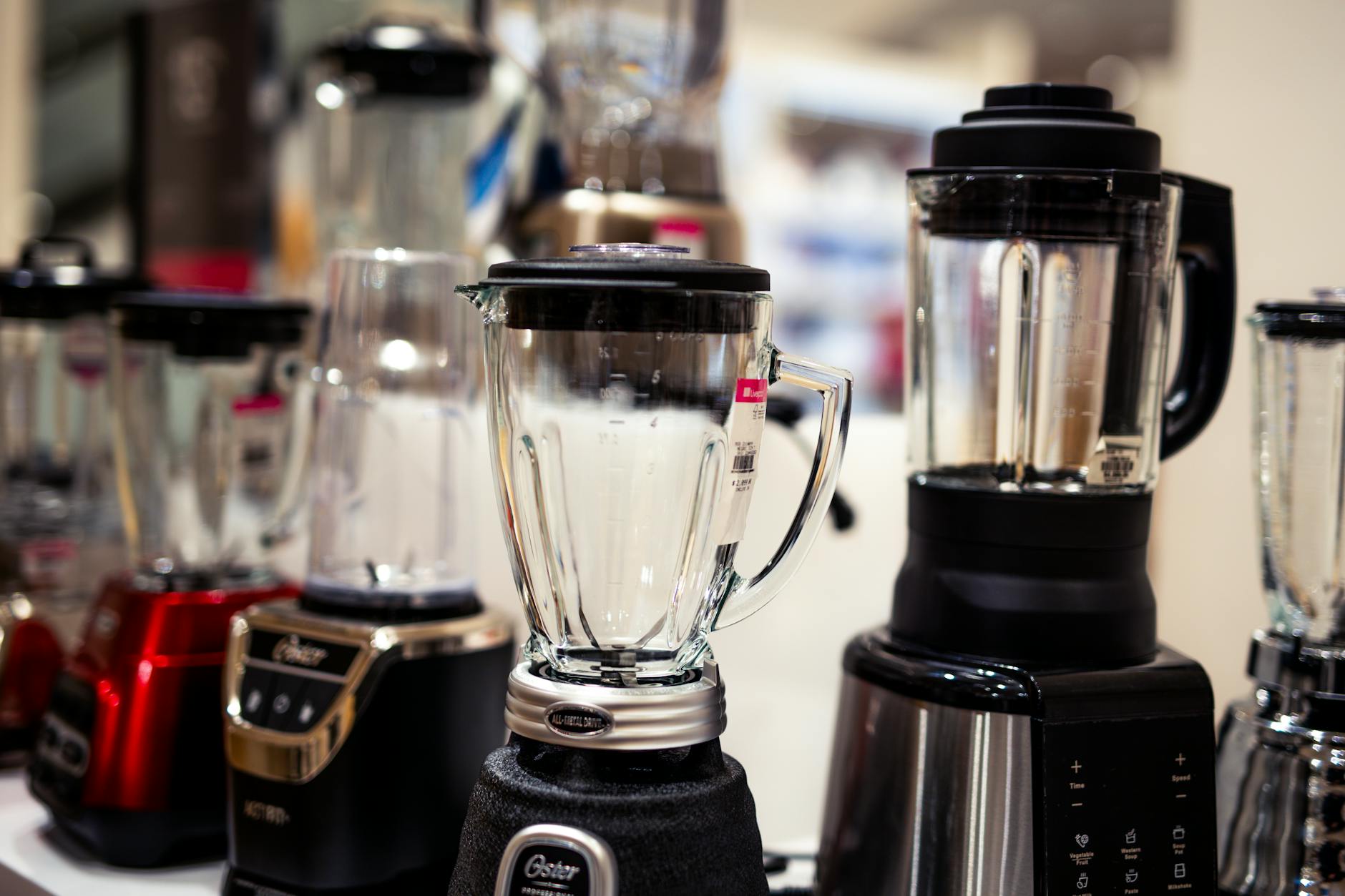
Marketed RPM figures — often 12,000–18,000 RPM — are measured with no load (the blender running in air). Put that same blender into a jar of thick idli batter, and the actual RPM can drop by 50% or more depending on motor torque and blade design.
The crucial aspect of a blender’s performance is how long it takes to maintain a consistent RPM under stress of the torque that it encounters. The amount of time that a blender is able to maintain a specific RPM under the torque of the ingredients will determine the smoothness or gritty texture of the finished product.
A blender that maintains a consistent 8,000 RPM while mixing a thick batter will out-perform a blender that only maintains 4,000 RPM yet has a higher peak wattage capacity.
It is important to note that the relationship between wattage and sustained RPM is not linear. For example, a 500‑watt blender using a universal motor could have a higher peak wattage but also have significantly less torque than a 300‑watt blender that has its motor gear optimized to maintain a steady RPM even at full load.
A Bamix of 140 watts makes 12,000 revolutions, a 200 watt version makes 18,000 RPM — illustrating how motor design, not raw wattage, dictates blade speed.
For a list of models that performed well under these criteria, see our companion buying guide: Best Hand Blenders in India for Thick Batters and Chutneys (Tested Against Wattage Claims).
To find a blender capable of grinding thick batters and chutneys, look for the following criteria:
- Duty Cycle Ratings (e.g., “1 min on/1 min off”) — if the cycle durations are short, then it is likely that the motor over-heats while running under load.
- Motor Type — AC motors generally produce more torque than universal motors at the same wattage rating.
- User Reviews That Specifically Mention Performance with Thick Batters or Chutneys.

Why higher wattage doesn’t mean faster grinding
The generalisation that higher wattage results in quicker grinding does not tell the whole story. Wattage is used to indicate power consumption and does not tell anything about the output power.
The efficiency of a motor can be very different (for example, a 500W blender may only produce an output of 250W due to inefficiency), while a 350W blender with 80% efficiency will provide an output of 280W.
For thicker mixes, the most important factor is the torque (twisting force), rather than the raw wattage. A high-torque motor provides consistent blade speed, as opposed to a high-wattage low-torque motor which may slow or stall when the blade meets resistance.
For this reason, some professional hand blenders are designed with gear reduction, which increases the amount of torque at lower speeds, similar to the way a low gear produces greater pulling force on a car at low speed.
If you are making an idli/dosa batter or coconut chutney, you will want a blender with high torque, rather than the highest blade speed.
Check the motor housing by: looking for the duty-cycle label. Shorter ON times (e.g., “30 sec ON / 2 min OFF”) indicate the motor can’t sustain power under load and is likely to overheat during thick blending.
If a blender’s marketing emphasizes only wattage and no-load RPM without mentioning performance in thick mixtures, it’s likely optimized for thin liquids.
BIS certification: What it covers and why it matters
Every hand blender sold legally in India requires BIS certification under IS 302 (Part 2/Section 14) as mandated by the Government of India in its Quality Control Order.
The IS 302-2-14: 2009 standard sets safety requirements for electric kitchen machines, covering electrical safety, insulation, overheating protection, and mechanical durability.
What the ISI mark tells you:
- The blender has passed third-party testing at a BIS-recognised lab.
- The motor and electrical components meet minimum safety standards.
- The manufacturer is legally accountable for the product’s compliance.
What it doesn’t tell you:
- How well the blender performs with thick batters.
- Whether the blade design is optimised for chutney.
- The sustained RPM under load.
A BIS mark is a safety floor, not a performance guarantee. Don’t buy a blender without it — but don’t assume it means the blender is good for Indian cooking.

Blend-performance inspection checklist: What to check before you buy
Prices and availability mentioned below are dated July 2026 on Amazon.in and are subject to change without notice.
The following guideline enables you to analyze the performance of a new blender before buying it based on the information obtained during practical experience of using it rather than advertising campaigns.
1. Motor and power delivery
- □ User should go for a blender with at least 300 watts sustained motor (300 less will suffice if batter-mixing only).
- □ The more duty-cycle specification is mentioned (“1 minute ON / 1 minute OFF”) the better.
- □ AC motors are more powerful than universal at the same wattage.
2. Blade design and material
- □ Blade Count: The use of a 2-blade system is best suited for the dense batter status. Whereas, the 4-blade design is faster with the lighter consistency of liquid.
- □ Material: Stainless steel 304 food-level steel has no threat of damage, corrosion, and smells.
- □ Detachable blade heads: The use of detachable blade heads allows adjusting according to the task needed.
3. Shaft and jar material
- □ Shaft: Stainless steel is preferred for durability and resistance to heat and smells.
- □ Jar: Stainless steel has an advantage over plastic; plastic jars are visible but they can become scratched over time.
- □ BPA-Free: Always check for BPA-Free labelling when going for plastic jars.
4. Safety and certification
- □ Presence of ISI/BIS Mark: It is a must and should be verified under IS 302 (Part 2/Section 14).
- □ Cord length: Cord should be at least 1.2 m for comfortable usage of the blender.
- □ Ergonomics: The hold should be comfortable and secure.
5. Real-world performance indicators
- □ User Reviews: Search for keywords such as “chutney,” “thick batter,” “thick” in reviews to find detailed info on performance.
- □ Warranty: Having a warranty period of 2+ years indicates a lot of confidence in the blender.
- □ Brand Reputation: Known brands usually have quality motors and better after-sales services.

Frequently Asked Questions
Can a hand blender really make smooth idli/dosa batter?
Yes, a hand blender can make batter for idlis and dosas in small to medium batches (1-2 kg dry). Look for a hand blender with at least 300w sustained power and a 2-blade design to create an acceptable quality of batter, but not the same as traditional wet grinding.
What’s the minimum wattage I need for coconut chutney?
For smooth coconut chutney, look for at least 300W sustained power (not peak); many 250W models produce coarse results. A 400W+ blender with a 2-blade design and stainless steel shaft is ideal for weekly chutney preparation.
Is a 4-blade hand blender better than a 2-blade for Indian cooking?
Not necessarily. Four blades will be faster for blending thin liquids; however, two blades will produce better results for thick batter or chutneys because they will create stronger currents with less resistance.
How do I know if a hand blender has good sustained RPM?
Manufacturers rarely publish sustained RPM figures. Instead, check the duty cycle rating, read reviews mentioning thick batters, and look for AC motor types, which generally provide better torque than universal motors.
Final Verdict
An indication of higher wattage on the box does not guarantee better chutney/batter quality as compared to other motors. Factors such as sustained torque, blade design, shaft material, etc., affect how the blenders perform in real-life situations and should be used to rate each blender against one another before making a purchase.
Use the blend-performance inspection checklist to measure your motor duty cycle, blade design and, most importantly, the BIS certification instead of relying only on peak wattage ratings. A blender that is unable to maintain its speed and torque while blending thick batter will not function well throughout the years, regardless of its price.