
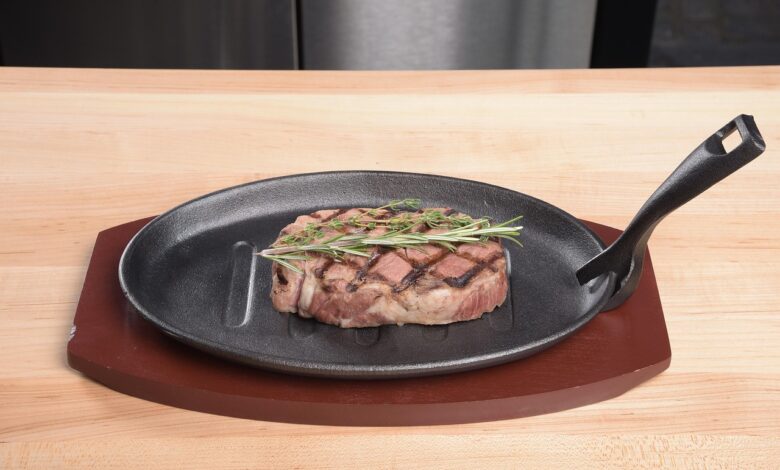
Bare cast iron wins on indestructibility and high-heat searing for Indian tempering, while enamelled cast iron wins on zero-maintenance and acidic gravy compatibility. The best choice depends entirely on your tolerance for seasoning upkeep versus the risk of enamel chipping under daily use.
Matching cookware limits to your weekly rotation of dry roasts, wet gravies, and deep-fries solves this decision. FDA standards confirm intact [glass-fused-to-metal surfaces](https://www.zendaguide.com/post/is-enameled-cast-iron-cookware-non-toxic) are non-toxic, but warn that chips expose underlying iron. Materials science explains this tradeoff between Mohs hardness and thermal shock resistance. By mapping frequent dishes against wear patterns, you avoid ruining expensive kadhais or leaving rusty tawas unused.
The materials science of bare iron versus fused glass
Bare cast iron is a porous iron-carbon alloy that relies on polymerized oil to create a semi-non-stick, rust-proof barrier. Enamelled cast iron replaces this organic layer with vitreous enamel, essentially fused glass fired at extreme temperatures onto the metal substrate. The mechanism here is porosity versus impermeability; bare iron interacts chemically with food and air, requiring maintenance to prevent oxidation.

The glass lining is completely inert and non-reactive out of the box, eliminating the need for seasoning cycles. Buyers who switch from bare to enamelled consistently notice the absence of metallic taste in tomato curries, because the glass barrier prevents ionic transfer between acidic ingredients and the iron core. This chemical isolation makes enamel superior for flavor purity but removes the self-renewing non-stick properties that bare iron develops through regular oil polymerization.
High-heat tempering and thermal shock limits
Indian cooking techniques like high-heat oil tempering (tadka) and dry-roasting spices push cookware to thermal limits where material differences become critical. Bare cast iron excels here due to its high thermal mass and lack of a brittle coating, allowing it to withstand direct aggressive heat without degradation. Enamelled cast iron remains vulnerable to thermal shock; rapid temperature changes or heating an empty kadai on high can cause the glass coating to craze, crack, or pop off the iron core.
Spectrum diagram comparing safe operating temperatures for bare versus enamelled cast iron during high-heat Indian cooking techniques.
This thermal limitation means enamelled pans require low-to-medium heat preheating and never dry-heating, making them less suitable for traditional high-smoke-point mustard oil tempering. Guidance on [avoiding thermal shock](https://www.americastestkitchen.com/articles/537-how-to-clean-and-care-for-enameled-cast-iron-cookware-dutch-ovens-and-skillets) emphasizes gradual temperature changes to preserve the glass-to-metal bond. Wear patterns on enamelled kadhais used for tadka often show hairline cracks radiating from the base center, because localized burner heat exceeds the glass’s expansion coefficient before the surrounding iron can distribute it.
Acidic curries and the reactivity threshold
Cooking tomato-based gravies, tamarind sambar, or kokum curries exposes the fundamental chemical divergence between these materials. Acidic ingredients strip the polymerized seasoning layer from bare cast iron through hydrolysis, leading to metallic-tasting food and potential iron leaching that requires immediate re-seasoning. Clemson extension guidance on [reactivity with acidic foods](https://hgic.clemson.edu/factsheet/cookware-safety/) confirms this mechanism affects both flavor and nutritional content when pH drops below 4.5 for extended periods.
Enamelled cast iron completely solves this problem because the glass lining is chemically inert, allowing users to simmer acidic curries for hours without altering the flavor profile or damaging the cookware. This makes enamelled kadais vastly superior for slow-cooked, tangy regional dishes where flavor integrity matters more than searing capability. Buyers who frequently prepare tamarind-heavy recipes consistently report cleaner taste profiles in enamelled vessels, because no iron ions migrate into the food to create astringent metallic notes.
The tradeoff is that enamel cannot develop the flavor-enhancing fond buildup that bare iron accumulates from repeated browning reactions.
The metal utensil problem and enamel chipping
Daily Indian kitchen mechanics involve flat metal spatulas, steel katoris for scooping, and aggressive scouring to remove stuck-on besan or caramelised onion bases. In [Indian kitchen forums and cookware blogs](https://www.potsandpans.in/blogs/articles/how-to-clean-enamel-cast-iron-without-chipping-the-surface), users report enamel coatings chip prematurely when scrubbing stuck-on gravies or using metal serving spoons inside the kadai. As one discussion noted, this damage is “common with Indian gravies, caramelised onions, or tadka” residues that demand mechanical force to release.

The mechanism of failure is Mohs hardness and brittleness; while glass resists chemical corrosion, it shatters under point-impact stress from harder steel utensils. A single strike from a steel ladle against the rim or interior can cause micro-fractures that eventually lead to enamel flaking into food, creating a jagged edge that poses safety hazards. Chipped enamel exposes raw iron to rust and compromises the food-contact barrier, requiring retirement of the vessel per FDA guidelines.
For bare iron scratches, the complete guide to [seasoning cast iron cookware for Indian kitchens](https://kitchengeek.in/the-complete-guide-to-seasoning-cast-iron-cookware-for-indian-kitchens/) provides repair protocols that restore functionality instantly.
Why standard Indian katoris destroy enamel coatings
Treating an enamelled kadai exactly like traditional steel or bare iron cookware is a costly purchase mistake. The advice that “enamelled cast iron is heavy-duty and indestructible” sounds reasonable given its weight and price, but fails because glass lacks the ductility of metal. Standard Indian methods of scraping bottoms with steel ladles or banging metal katoris against rims create immediate shock points that fracture the glass lining.
Buyers who refuse to switch to silicone or wooden utensils should avoid enamelled cast iron entirely, as replacement costs far outweigh convenience benefits. The cumulative impact of daily metal contact guarantees premature failure regardless of brand quality or price tier. Bare iron absorbs these mechanical abuses indefinitely, with utensil marks simply becoming part of the seasoning texture rather than structural defects.
Bare vs enamelled cast iron decision matrix
Use this matrix to match material properties to your specific cooking patterns and utensil habits. Estimated figures carry conditional framing based on typical usage and should be adjusted for individual frequency and care practices.
| Factor | Bare cast iron | Enamelled cast iron |
|---|---|---|
| Maintenance effort | Moderate-high (regular seasoning, no soap soaking) | Low (simple washing, no seasoning needed) |
| Utensil compatibility | Metal-safe; scratches repairable | Silicone/wood only; chips are permanent |
| Best dish suitability | Dry roasts, deep-fries, high-heat tadka | Wet acidic curries, slow braises, delicate sauces |
| Estimated 5-year cost-per-use | Very low (generational lifespan) | Variable (high if chipped; low if carefully maintained) |
Cost-per-use calculations reveal bare iron typically delivers lower long-term expense despite higher maintenance labor, because it survives decades of abuse that destroys enamelled counterparts. Enamelled cookware earns its premium only when used exclusively for tasks where chemical inertness outweighs fragility risks.
Branching decision tree guiding readers from cooking habits and utensil preferences to definitive bare or enamelled cast iron recommendations.
Avoid enamelled cast iron if you rely on steel ladles or frequently prepare dishes requiring aggressive deglazing with metal tools. Bare iron remains the mandatory choice for high-utility everyday cooking where utensil flexibility is non-negotiable. Enamelled is superior for specialized acidic preparations where flavor purity justifies careful handling and higher replacement risk.
Final verdict
Bare cast iron suits aggressive daily Indian cooking with metal utensils and high-heat tempering, while enamelled serves acidic gravies where chemical inertness matters most. Match your primary cooking technique and utensil habits to the appropriate material before purchasing. Ignoring this alignment leads either to ruined enamel from metal contact or unnecessary seasoning labor when glass would suffice.
Frequently Asked Questions
Does chipped enamelled cast iron pose a health risk?
While underlying iron is safe, cheaper enamel pigments may contain trace heavy metals that migrate once the glass barrier compromises. FDA food-contact guidelines recommend retiring heavily chipped enamelled cookware to prevent potential contamination from exposed pigment layers.
Can I use an enamelled cast iron kadai for deep-frying pooris?
Enamelled iron holds heat well but poori temperatures often exceed 200°C, pushing enamel near its thermal shock threshold. Rapid heating or crowding with cold dough risks cracking; bare iron remains safer for dedicated high-temperature deep-frying tasks.
Is “lightweight” enamelled cast iron available in India worth buying?
Lightweight models thin the iron core to reduce mass, severely compromising heat retention and increasing warping risk. Thinner bases concentrate thermal stress, making enamel cracking more likely under high Indian stovetop heat compared to traditional full-weight constructions.
