
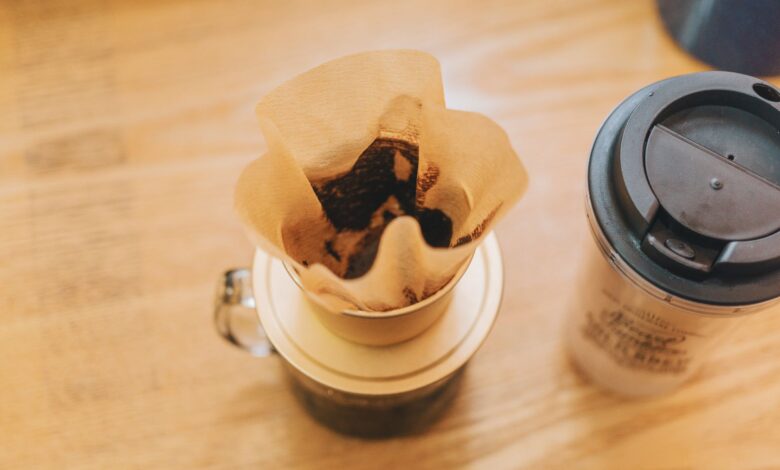
Picture a family of four at 7 in the morning: the filter has just finished dripping, yet the coffee inside fills only two tumblers, so half the household waits through a second 15-minute brew. If you have ever asked what size filter coffee maker you need for your family, start by ignoring the cup count on the box and size the vessel to the strong coffee your household actually drinks, measured against the shelf space it will occupy.
Specialty roasters define authentic kaapi by its decoction-to-milk ratios: one serving takes roughly 40–50ml of concentrated decoction topped up with hot milk, so a “2–4 cup” filter yields just 100–150ml in total. Too large a filter wastes powder that turns bitter as it oxidizes, while too small a one turns every morning into a bottleneck. Matching millilitre yields to your family size and shelf depth solves both problems at once.
The “cup” myth in South Indian filter coffee
Western drip recipes treat a cup as 150–200ml of finished coffee sitting in a mug, but the South Indian filter works on a different unit entirely. One “cup” here means roughly 40–50ml of concentrated decoction that is poured into hot milk later, and box labels borrow that smaller unit without ever explaining it.
A filter sold as “2–4 cups” therefore carries enough powder for only 100–150ml of decoction, which poured against hot milk fills two to three traditional davara tumblers. Buyers who expected mug-sized servings feel short-changed on the very first morning.
The same confusion runs through Amazon.in customer reviews for compact stainless filters, where several purchasers note the yield covers only one or two tumblers. As one reviewer put it, the vessel is “sufficient to make two cups’ worth decoction” — a genuine complaint, yet one aimed at the label rather than the vessel.
The decoction-to-milk ratios behind authentic filter kaapi explain the gap, since milk fills most of the tumbler and the decoction “cup” stays small by design. Buyers who have lived with a compact filter for a few weeks consistently notice the tumbler count matches the box once the milk goes in, because the vessel is dosed for concentrate rather than mugs.

Mapping decoction yield to your household size
Most Indian listings fall into three capacity tiers, even when the box still reads “2–4 cups” or “4–6 cups.” Standard volume classifications on Amazon.in run roughly 150–200ml for one or two drinkers, 250ml for a family of four, and 400ml or more for joint families with steady guest traffic, and that ml figure always refers to decoction the vessel is dosed to produce, not mugs.
The table below translates each tier into what actually lands in the tumbler, using typical powder doses and a 40–50ml decoction pour per serving.
| Filter capacity (ml) | Coffee powder required (g) | Decoction yield (ml) | Davara tumblers served |
|---|---|---|---|
| 150–200 | approx. 10–15 | approx. 80–120 | 2–3 |
| 250 | approx. 16–18 | approx. 120–160 | 3–4 |
| 400+ | approx. 25–35 | approx. 200–280 | 5–6 |
Read the rows against your weekday routine rather than your festival weekend, because a family of four pouring 40–50ml of decoction per tumbler sits squarely in the 250ml tier. A couple drinking one tumbler each, on the other hand, only wastes powder on anything bigger.
The 400ml+ tier earns its counter space only when five or more tumblers leave the kitchen on a normal morning. Below that count, the extra capacity is shelf space paying for itself in nothing.
Decoction also keeps in the refrigerator for about a day, so a correctly sized 250ml filter can cover an unexpected evening guest without a fresh brew.
Capacity changes brewing behaviour as well, because a bulk batch in a 400ml filter simply needs longer to drip. A full batch can run twenty minutes or more, which is fine on a slow Sunday and painful at 6am.
Larger vessels also need coarser mesh management to prevent clogging and over-extraction, and the companion guide to mesh gauge and drip rate covers how those two variables set strength and clarity.
Reading the dimension tables on typical listings reveals one more quirk: the quoted capacity covers only the brewing chamber, so the assembled two-piece stack needs noticeably more shelf height than the number suggests.
Managing drip time and powder density across sizes
Percolation is a resistance game, because the powder bed must be deep enough to slow the water down. A standard brew therefore leans on roughly 16–18g of coffee dripping for close to 10 minutes — the drip duration a specialty roaster specifies for full extraction — and it is bed depth, not vessel size, that sets that pace.
Load a 400ml filter with just 15g of powder for two people and the geometry collapses, as water cuts channels through the shallow bed and races through in minutes. What pours out is pale, under-extracted decoction, since extraction needs contact time and a racing stream skips it.
The large vessel only earns its keep when the powder dose scales with it.
Buyers who shrink their daily brew inside an oversized filter consistently report watery, flavourless kaapi, because the thin bed offers too little resistance and contact time drops below what extraction needs. The same dose in a correctly sized filter would have dripped slow and strong.
Why buying a large filter for a small family ruins the brew
Buying a 400ml filter “for the future” or for the occasional guest sounds prudent, and the small price gap over a 250ml model makes the upgrade feel almost free. In daily use, though, it forces an ugly choice: dose enough powder to rebuild bed depth every morning and burn expensive coffee on two drinkers, or accept thin decoction as the house default.
Occasional guests rarely justify a permanently oversized vessel, since a correctly sized 250ml filter brewed twice on a festival morning beats a half-loaded 400ml filter brewed every single day. The second batch costs fifteen minutes, but the weak brew costs every breakfast.
The countertop reality: measuring footprint for small kitchens
Volume labels hide physical bulk, and a 400ml brass or stainless filter typically lists a base 12–15cm across while the assembled two-piece stack can stand past 20cm tall. Modular kitchens with narrow shelves and low cabinet clearance often have no honest home for that silhouette.
A quick check of product dimension data before ordering makes this concrete, because the listed base diameter — not the ml figure — decides whether the vessel fits the shelf gap beside the mixer jar.

Holding a 400ml filter in hand shows the other half of the problem, because the rim and the lower receiving vessel add height that the capacity number never mentions. Vertical clearance therefore matters as much as depth, and many Indian kitchens park the filter under a wall cabinet or beside a shelf-mounted mixer where 20cm of clear space is not guaranteed.
Check the intended shelf by measuring its depth and the vertical clearance above it before you order. A fully assembled 400ml filter can exceed 20cm in height, and it must slide in without blocking the cabinet doors.
Height also complicates washing, since dropping a tall, heavy 400ml brass filter into a shallow modular sink can dent the lower receiving vessel or damage the rim. Wash the two pieces separately, seated flat in the basin.
Answering what size filter coffee maker do I need for my family
One question settles the purchase: how many tumblers of coffee leave your kitchen on a typical weekday morning? Count tumblers rather than people, because regulars often drink two, and let the flowchart below map that count — and your shelf — to a capacity.
Decision flowchart: weekday tumbler count picks the capacity tier, and shelf dimensions vet the 400ml+ branch.
The middle branch is where most Indian households land, because the 250ml filter balances powder economy and yield for three to four tumblers and has therefore become the nuclear-family default. The 150–200ml branch suits couples and solo drinkers, dripping fast and storing flat on shallow shelves.
The 400ml+ branch carries a physical condition the ml label never mentions, namely dedicated shelf space roughly 15cm deep with more than 20cm of clearance. Weekend guests alone do not move you up a tier, since two back-to-back 250ml brews still use less powder than one half-loaded 400ml batch.
Buyers who have owned a correctly sized 250ml filter for a year consistently call it the “just right” vessel, because powder dose, drip time and yield all sit inside the range the design intended.
Before you buy
The right filter size matches your weekday decoction yield in millilitres, not the cup count printed on the box. Count tumblers for an ordinary morning, then measure the shelf’s depth and clearance before you order. Do both and the filter brews the exact right amount every day, while skipping either leaves you re-brewing mid-rush or drinking weak kaapi all year.
Frequently Asked Questions
Does a larger filter brew stronger decoction if I use the same amount of coffee powder?
No — the same powder spread across a larger filter forms a shallower bed, so water races through too quickly to extract full flavour. You get thinner, weaker decoction rather than a stronger brew.
Can I brew a single cup of coffee in a 250ml filter without wasting powder?
It is possible, but an underfilled powder bed drips too fast and yields noticeably thinner decoction. If single servings are your daily routine, a 150ml filter keeps proper bed depth and extraction.
How does the material (brass vs stainless steel) affect the physical dimensions of the same capacity?
Brass is usually cast with thicker walls to hold heat, so a 250ml brass unit sits heavier and a touch wider than its stainless steel twin. That extra width matters on narrow shelves and over shallow sinks.
