
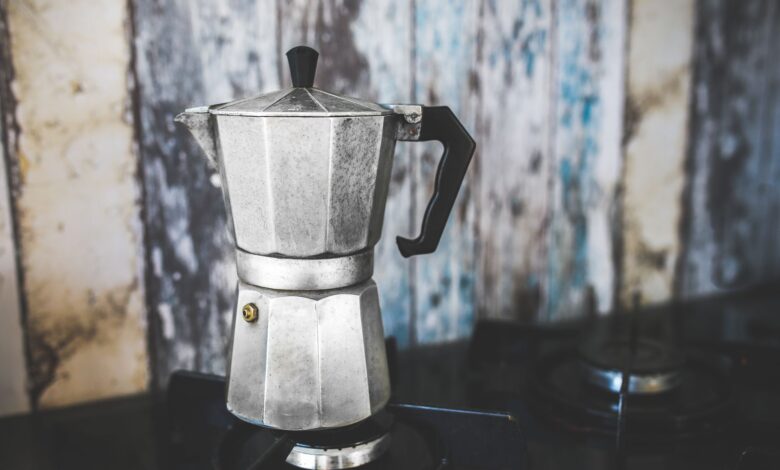
Asking which electric coffee maker makes the best South Indian filter coffee decoction usually ends in disappointment, because standard drip machines pour a thin brew that vanishes into milk. The stovetop moka pot comes closest to traditional strength, and it gets there in a fraction of the time. The reason is pressure: a moka pot’s 1 to 2 bars of pressure stand in for the filter’s slow percolation, so the method has to match your blend.
Specialty roasters and appliance safety regulators judge these brewers by extraction physics and Indian electrical compliance, not by marketing claims. Speed carries a catch, though: fine chicory blends can clog a pressurized moka pot and scorch bitter in the chamber. Mapping extraction, clogging risk, and ISI certification together is what reveals which method truly respects your kaapi.
The physics of decoction: gravity vs pressure extraction
The traditional South Indian filter works by patience, because hot water poured over a coarse coffee-chicory bed pulls itself down by gravity over 20 to 30 minutes and never agitates the fines. The bed itself acts as the filter, trapping chicory particles that would otherwise turn the decoction gritty.
A stovetop moka pot — often sold as a stovetop espresso maker — replaces patience with steam, since sealed water below boils and the resulting 1 to 2 bars of pressure push water through the grounds in roughly 5 to 8 minutes. The decoction lands at a similar concentration, but the extraction profile shifts, because pressure drags more oils and dissolved solids through and trades delicate aromatics for a heavier body.
In the moka pot vs filter coffee maker decoction debate, that trade is the whole argument.
Setting the two cups side by side makes the difference plain: the gravity filter’s decoction pours clearer and smells sweeter, while the moka pot’s carries a thicker mouthfeel and a faint ring of fines. Forced pressure extracts compounds that slow dripping leaves behind in the bed, which is why the cups differ even when the powder is identical.
The cross-section below shows what happens inside each vessel while a brew runs.
Cross-section comparison: gravity pulls water slowly through a coarse bed, while steam pressure forces it through a compacted puck.
Identical powder, two physics — gravity rewards time, while pressure rewards speed.
Why standard electric drip machines fail the decoction test
A Western electric drip machine looks like the answer to a slow morning, since its shower head wets the grounds with fast, low-pressure water and a full pot finishes in minutes. With coarse Indian filter powder, though, that speed is exactly the problem: water washes over the bed before extraction completes.
What lands in the jug is a pale liquid that disappears into boiling milk instead of standing up to it. Authentic decoction needs viscosity — dissolved solids and oils in real concentration — and a fast shower of water cannot pull those from a coarse, chicory-heavy bed.
Buyers who have swapped a brass filter for a drip machine consistently describe weak, tea-like coffee, and the same complaint repeats across consumer discussions of electric drip coffee machine limitations, because low pressure and a fast flow rate leave most soluble material locked in the grounds.
Drip machines still earn their counter space for Western-style black coffee or large breakfast batches. For kaapi they are the wrong tool, not a bad one.

The chicory clogging risk in stovetop moka pots
Traditional Indian coffee powder is rarely pure coffee, because most household blends carry roughly 20–40% chicory for body and that familiar dark colour. Under gravity the chicory behaves, but under pressure it becomes a hazard.
Chicory particles are denser than coffee grounds and swell when soaked, so inside a moka pot’s sealed chamber the swollen fines wedge into the fine metal filter plate and repeated cycles bake them into the perforations. That baked-on buildup is the chicory clogging in moka pots problem that turns a quick brew into a blocked one.
A blocked plate does more than slow the brew, because steam with nowhere to go raises internal pressure and overheated grounds scorch into a bitter cup. A moka pot left on high flame with a chicory blend typically ends in either an astringent brew or pressure hissing at the seal.
Two adjustments keep pressure brewing safe with Indian blends: use a grind coarser than espresso — closer to fine filter powder than Turkish flour — and pull the pot off the flame the moment it gurgles, never letting it boil dry. A low flame, not a high one, builds the steady pressure that keeps extraction even.
Check the filter plate by holding it up to a bright light after brewing a chicory blend and looking for dark impacted holes that a quick rinse misses. Clearing those holes with a soft brush before the next brew matters, because baked-on chicory narrows the passages that regulate steam pressure.
After a few weeks of pressure brewing, a dark ring typically forms around the plate’s rim, because swollen chicory fines wedge into the outer perforations first, where the water flow concentrates.

Navigating ISI marks and BEE ratings for electric percolators
Electric percolators take a third route, because a pump cycles boiling water through the grounds repeatedly and stacks strength with each pass. That repeated boiling draws serious power, so two labels decide whether a unit belongs in an Indian kitchen: the ISI mark and the BEE star rating.
Every electric coffee maker sold in India must carry the BIS ISI mark under mandatory IS 302 certification, which tests insulation, earthing, and wiring so a splash-heavy kitchen does not turn a fault into a shock. The mark verifies electrical safety only — nothing about brew strength, element durability, or how the machine handles chicory.
The BEE star rating sits beside it as the running-cost signal, because more stars generally mean better insulation and lower standby draw. For a BEE star rated coffee maker in India, that trims the cost of keeping water hot between percolation cycles, though the active boiling element still sets most of the bill.
Before committing, turn the unit over and read the rating plate, where the ISI logo should appear with the IS 302 standard number printed beside it rather than as a decorative sticker on the box. A plate showing only wattage and voltage, with no standard number, typically means the certification claim stops at the packaging.
So the choice of an electric percolator for Indian coffee starts at the rating plate, not the brochure. The companion guide to ISI mark and electrical safety in electric coffee makers extends that check to cord quality, plug moulding, and earthing — details a rating plate alone cannot show.

Which electric coffee maker makes best South Indian filter coffee decoction?
The fork resolves by priority rather than by one universal winner, and the table below lines up the three methods on the five traits that decide a kaapi household’s choice: time, mechanism, chicory behaviour, sediment, and body.
| Criterion | Traditional gravity filter | Stovetop moka pot | Electric percolator |
|---|---|---|---|
| Brew time | Typically 20–30 min | Typically 5–8 min | Roughly 8–12 min per cycle set |
| Extraction mechanism | Gravity drip through a coarse bed | 1–2 bar steam pressure | Repeated boiling-water cycling |
| Chicory compatibility | Excellent — fines stay in the bed | Risky — swelling fines clog the plate | Moderate — fines can reach the element |
| Sediment level | Low | Moderate | Typically higher |
| Decoction viscosity | High, viscous | High, heavier body | Low to moderate |
Read the middle column as the speed compromise, because the moka pot matches the filter’s body but demands grind discipline and flame attention the filter never asks for. The percolator wins only on hands-free volume: its cycling boils water repeatedly, which flattens aromatics and thins the body most households expect from decoction.
Buyers who have owned all three setups consistently describe the same division of labour: moka pot on rushed weekdays, brass filter on slow weekends, and percolator relegated to guest mornings, because each method’s strength matches a different morning rather than a different taste.
If speed is the daily priority, choose the moka pot and accept its cleaning discipline; if ritual and clarity matter most, keep the gravity filter. If unattended volume is the need, an ISI-marked percolator fills tumblers, just not with full-strength decoction.
Final thoughts
No brew method replicates a traditional filter exactly, though the moka pot comes closest on strength because pressure stands in for patience, while drip machines and percolators trade body for convenience. Match the method to your mornings: verify the ISI plate before buying any electric unit, and calibrate grind and flame before trusting a moka pot with chicory. Do that and kaapi stays thick and quick; skip it and you drink thin coffee or scrub scorched plates.
Frequently Asked Questions
Can I use a standard 80/20 coffee-chicory blend in an electric percolator without damaging the heating element?
Physically yes, but fine chicory particles slip past the coarse metal basket and settle on the heating element, where they scorch and accumulate. A paper or fine-mesh liner shields the element during high-chicory brews.
Does a BEE 5-star rating on an electric coffee maker actually reduce the power consumption of the continuous percolation cycle?
The star rating mainly reflects standby draw and heat retention between cycles, not the element’s active boiling wattage. Better insulation trims energy use a little, but repeatedly boiling water still drives most of the bill.
Why does my moka pot decoction taste burnt and bitter compared to my traditional brass filter, even when using the exact same powder?
The moka pot’s lower chamber often exceeds 95°C before steam pressure forces water through, scorching chicory particles in the process. A traditional gravity filter uses just-off-boil water that cools slightly as it drips, producing a smoother, less astringent cup.
